

Introduction: The Questions That Make Students Sweat
Every year, GCSE maths examiners release their reports. And every year, the same patterns emerge.
There are certain questions, specific topics, specific question styles, that consistently cause students to lose marks. Not because the maths is impossibly hard, but because these questions require a particular approach, a careful reading, or a step that students often miss.
The good news? Once you know what they are, you can prepare for them.
This guide walks you through the five most common GCSE maths stumbling blocks, and shows you exactly how to turn them from weaknesses into strengths.
1. Fractions, Decimals & Percentages (The Tricky Trio)
[IMAGE PROMPT 2: FRACTIONS DECIMALS PERCENTAGES]
*A colourful visual showing a pie chart divided into fractions, decimals, and percentages. The same quantity is shown three ways: 1/2 = 0.5 = 50%. The image conveys that these three are just different languages for the same idea.*
It sounds basic. But questions involving fractions, decimals, and percentages, especially in combination, are among the most common sources of errors.
Why students struggle:
- Confusing which operation to use (multiply vs divide)
- Forgetting to convert between forms
- Misreading “increase by 15%” as “multiply by 0.15”
How to fix it:
- Remember: “of” means multiply. 15% of 60 = 0.15 × 60
- Percentage increase: multiply by (1 + percentage as decimal). Increase by 15% = × 1.15
- Percentage decrease: multiply by (1 − percentage as decimal). Decrease by 15% = × 0.85
Practice tip: Do five mixed questions every day. Fluidity comes from repetition.
2. Algebraic Fractions (The Fear Factor)
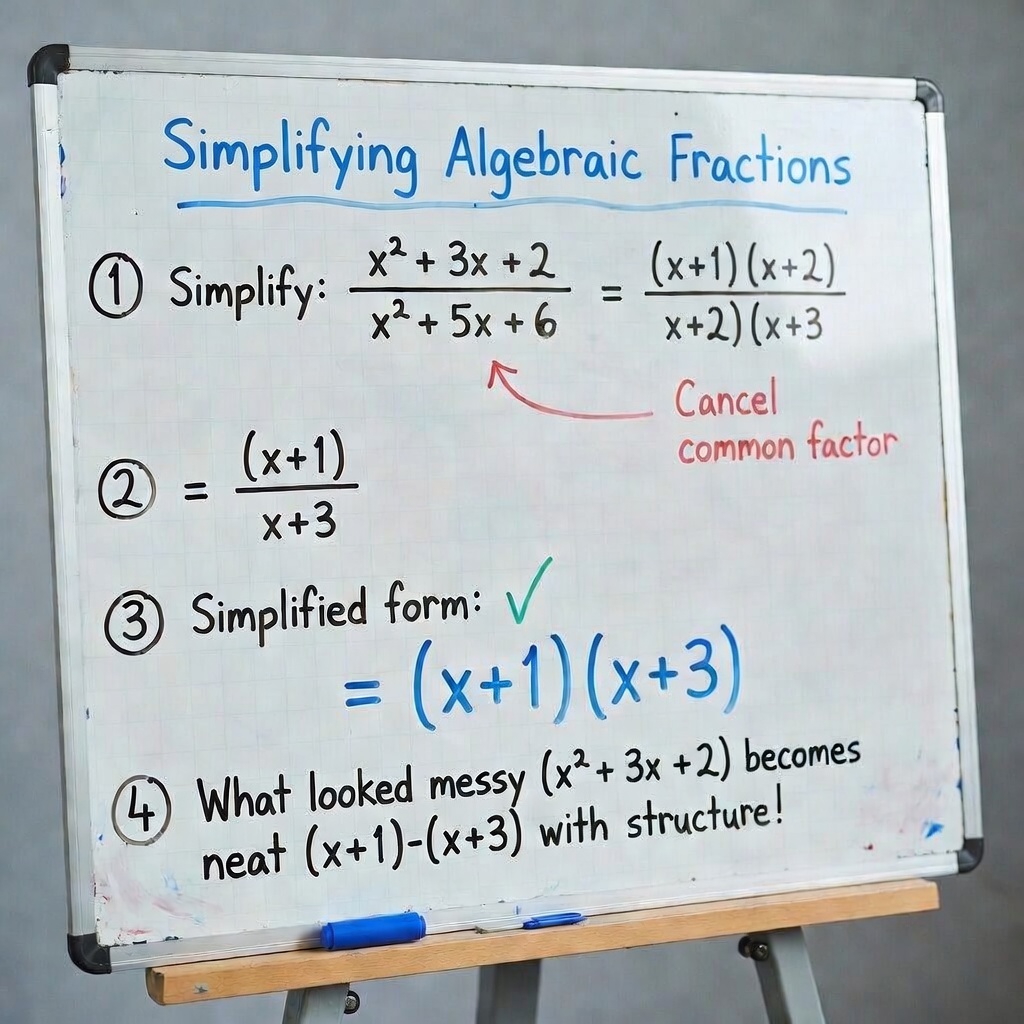
Algebraic fractions, fractions where the numerator or denominator contains an expression like (x + 2)—often cause students to panic.
Why students struggle:
- They look intimidating
- Students forget the rules for adding/subtracting fractions
- Factorising feels like a separate skill they haven’t mastered
How to fix it:
- Remember: same rules as number fractions.
- To add or subtract, find a common denominator (factorise first if needed)
- To multiply, multiply numerators and denominators
- To divide, flip the second fraction and multiply
Practice tip: Start with simple number fractions, then replace numbers with (x + 2), (x − 3), etc. The rules don’t change—only the symbols do.
3. Quadratic Equations (Where Students Give Up)
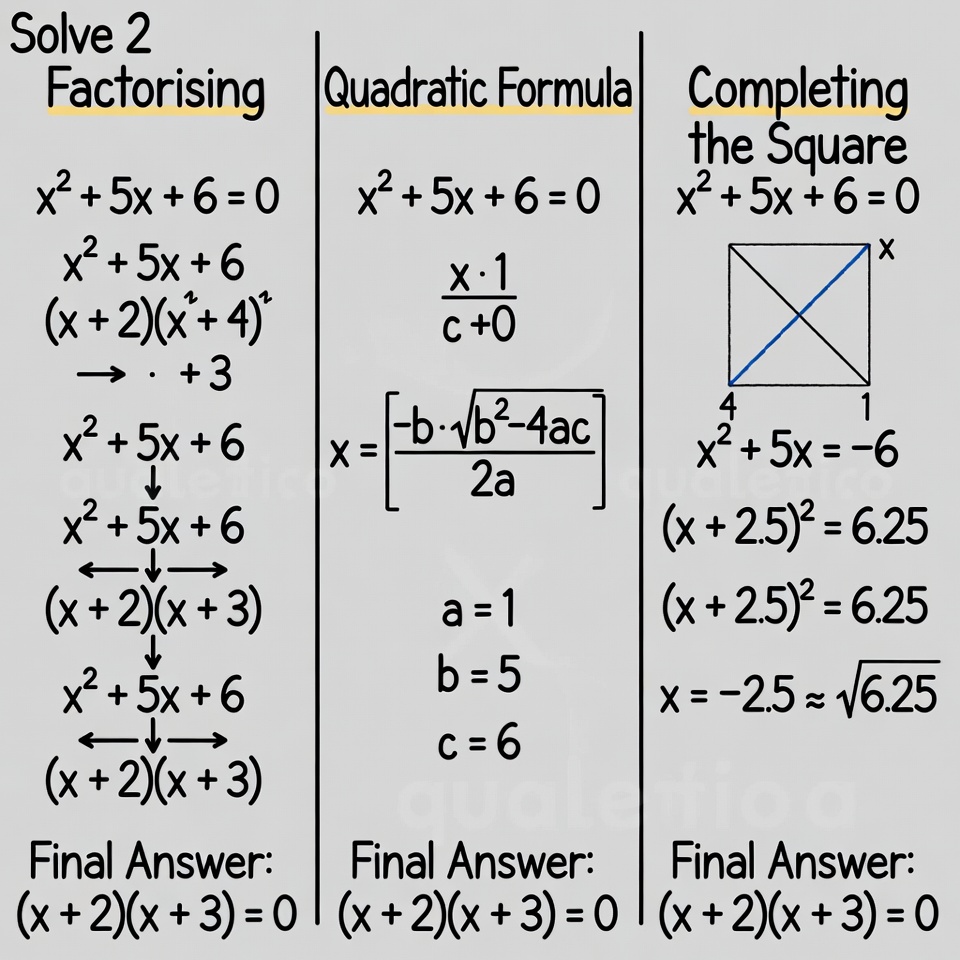
Quadratic equations—especially those that don’t factorise neatly—are where many students abandon hope.
Why students struggle:
- They don’t know which method to choose
- The quadratic formula looks like a foreign language
- They forget that a “no solution” answer can still be correct
How to fix it:
- First, check if it factorises. If you can spot factors, use them.
- If not, use the quadratic formula. Write it out every time. Practice makes it familiar.
- For higher tiers, completing the square becomes essential.
The quadratic formula:
x = [−b ± √(b² − 4ac)] / 2a
Practice tip: Write the formula on a sticky note. Use it until you dream about it.
4. Ratio & Proportion (The Word Problem Trap)
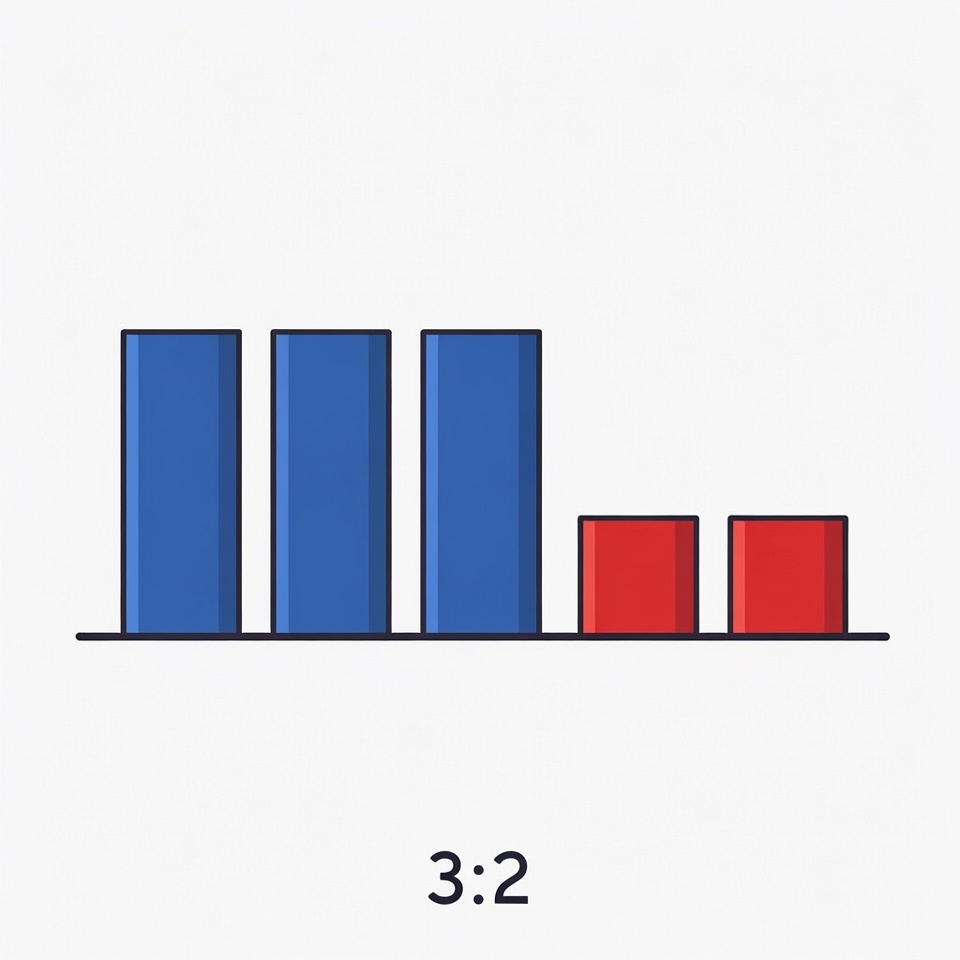
Ratio questions often appear in word problems, and students lose marks not because they can’t do the maths, but because they misread the context.
Why students struggle:
- Mixing up “share in the ratio” with “difference given”
- Forgetting that ratios compare parts, not absolute amounts
- Missing the key word that changes the whole problem
How to fix it:
- Draw it. A simple bar model can turn a confusing word problem into clear visuals.
- Remember: total parts = sum of ratio numbers. If ratio is 3:2, total parts = 5.
- If the difference is given, find the value of one part: difference in ratio ÷ difference in parts.
Practice tip: Turn every ratio word problem into a drawing before you do any calculations.
5. Probability & Venn Diagrams (The Hidden Details)
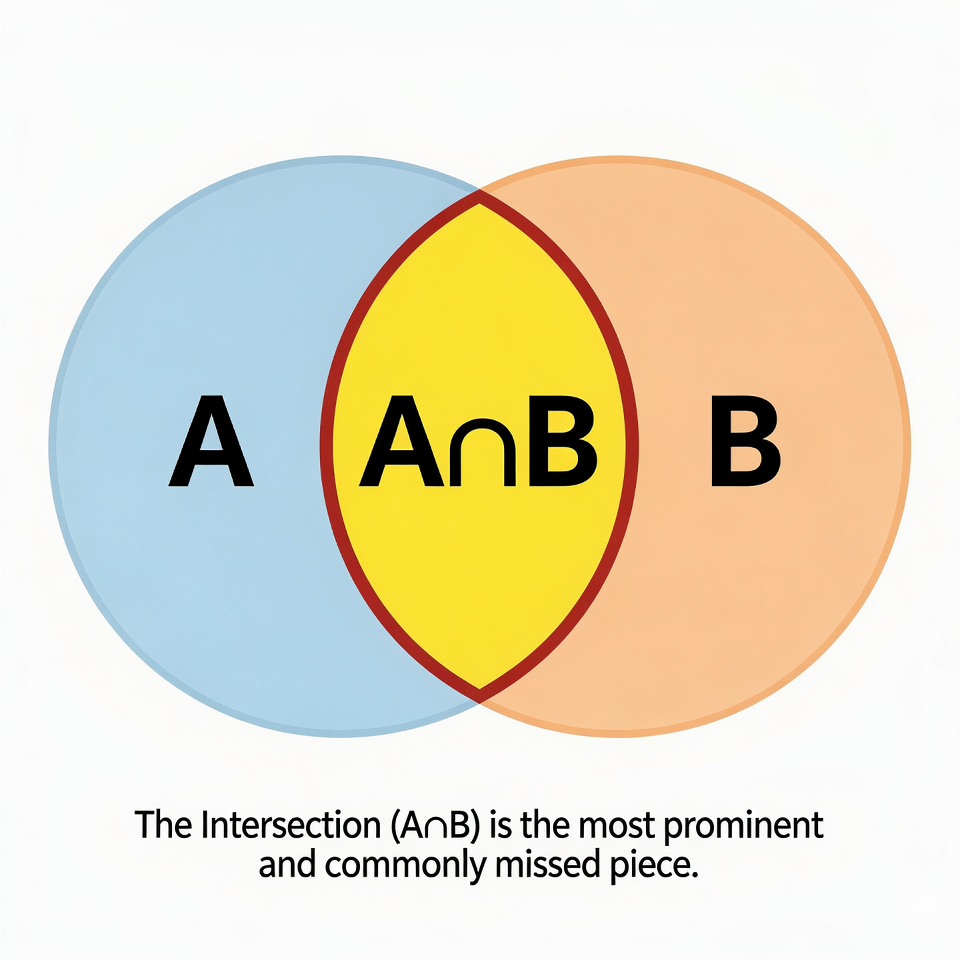
Probability questions, especially those involving Venn diagrams or tree diagrams, often hide marks in the details.
Why students struggle:
- Forgetting that probabilities add up to 1
- Missing the “and” vs “or” distinction
- Not labelling Venn diagrams fully (especially the outside region)
How to fix it:
- P(A or B) = P(A) + P(B) − P(A and B)
- For independent events: P(A and B) = P(A) × P(B)
- Venn diagrams: always label the outside region. It’s where marks hide.
Practice tip: Write the rules on a flashcard. Practice one probability question a day until the formulas feel automatic.
The Real Secret: It’s Not About Being a “Maths Person”

Here’s what top students know: GCSE maths isn’t about being naturally “good” at maths. It’s about recognising the patterns, knowing the methods, and practising until those methods become automatic.
Every single question on this list becomes manageable when you:
- Know what the question is asking
- Have a clear method in mind
- Have practised it enough that the method feels familiar
You don’t need to be a genius. You just need to be prepared.
How Royale Tutors Can Help
If your child is struggling with any of these question types, targeted support can make all the difference.
At Royale Tutors, we don’t just teach maths. We:
- Identify the exact question types where marks are lost
- Build confidence through structured, step‑by‑step practice
- Teach the exam techniques that turn “I don’t get it” into “I’ve got this”
Ready to turn tricky questions into easy marks?
Leave a Reply