

Let’s talk about the secret weapon nobody tells you about.
You’ve revised. You’ve done past papers. You know the content.
But when you sit down in that exam hall, something happens. Your heart races. Your mind second‑guesses every answer. You change a correct answer to a wrong one.
That’s not a knowledge problem. That’s a confidence problem.
And here’s the thing: confidence isn’t just about “feeling good”. It literally changes how your brain performs under pressure.
Let me explain.
What Actually Happens in Your Brain When You’re Confident
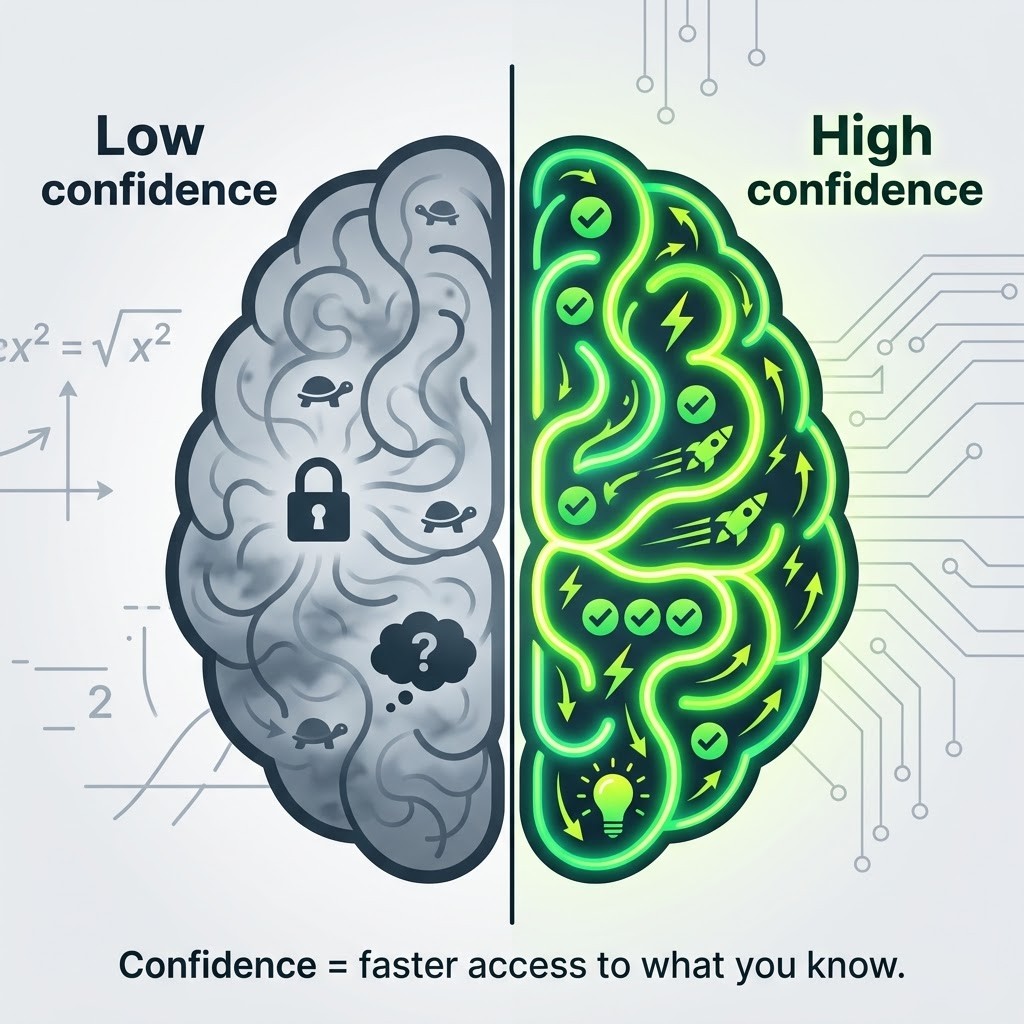
When you’re confident, your brain releases less cortisol (the stress hormone). That means:
- Faster recall – You don’t have to fight through mental fog.
- Fewer second‑guesses – You trust your first answer (which is usually right).
- Better decision‑making – You can focus on the question, not your anxiety.
- More working memory – Less brain space taken up by panic means more space for problem‑solving.
When you’re not confident? Your brain is too busy sounding the alarm to retrieve what you’ve learned.
The Confidence Loop (It Works Both Ways)
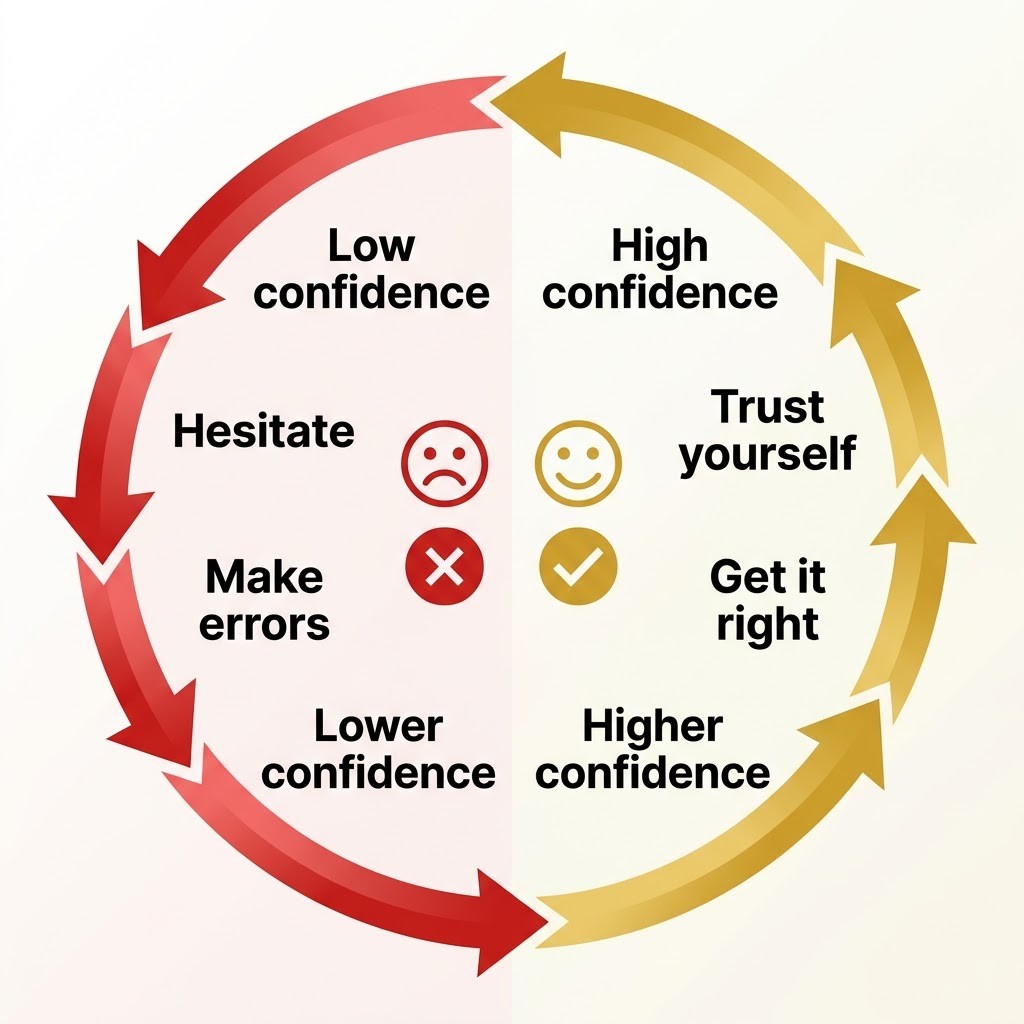
Confidence creates a positive spiral:
- You trust yourself → You answer without overthinking → You get it right → You feel more confident → You trust yourself more.
Low confidence creates a negative spiral:
- You doubt yourself → You hesitate or change answers → You make errors → You feel less confident → You doubt yourself more.
The exam hall doesn’t reward doubt. It rewards trust.
Why Confidence Isn’t “Fake It Till You Make It”
I’m not telling you to pretend. I’m telling you to protect the confidence you’ve earned.
You revised. You did the work. That’s real evidence. Use it.
Here’s what confidence actually looks like:
- Trusting your first answer. Studies show your first instinct is correct more often than your second guess. Unless you have a clear reason to change it, leave it.
- Moving on when stuck. A confident student knows that getting stuck on one question doesn’t mean they’ve failed the whole paper. They circle it and come back.
- Not comparing yourself to others. The person next to you might be writing furiously. That doesn’t mean they’re right. It might mean they’re panicking.
- Taking the last 5 minutes to check. Confident students don’t put their pens down early. They harvest easy marks by scanning for blanks and silly errors.
How to Build Real Confidence (Not Fake Confidence)
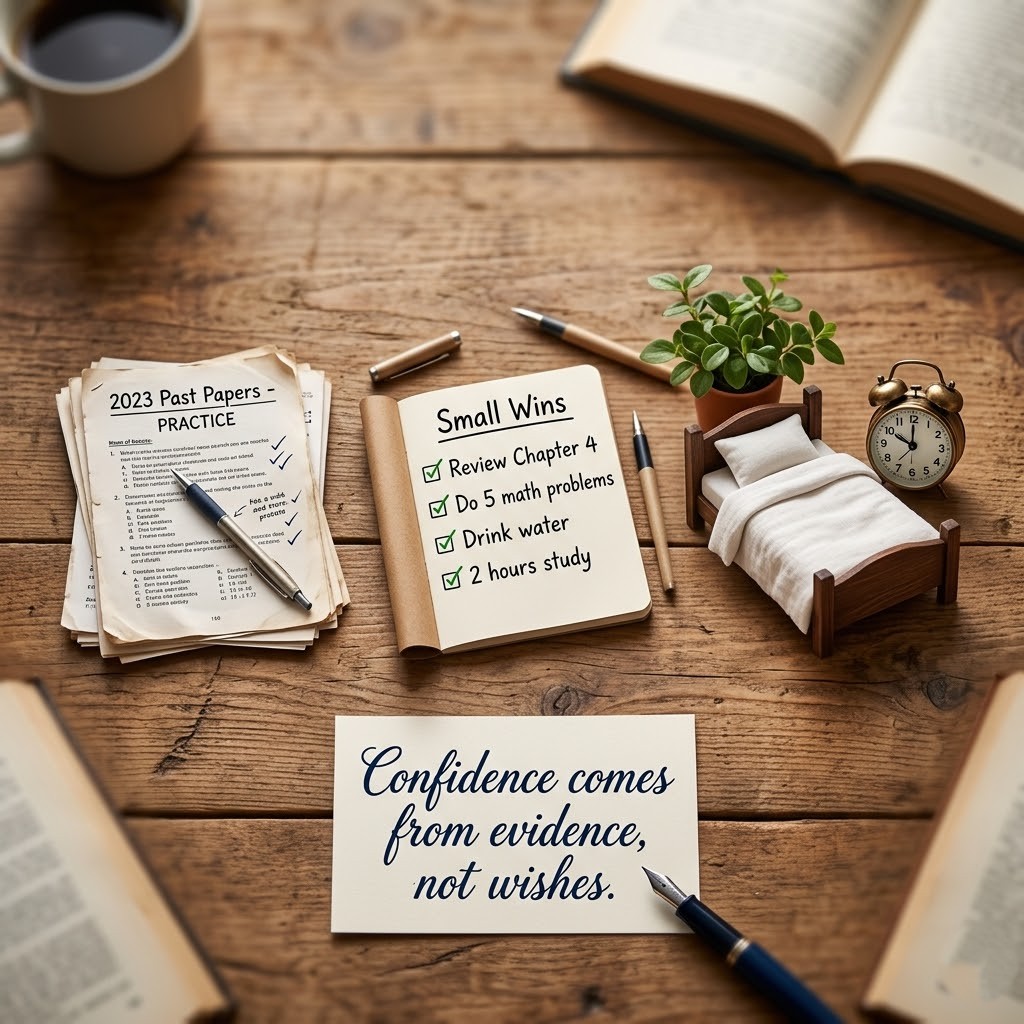
1. Past papers under timed conditions.
Nothing builds real confidence like walking into an exam and thinking: “I’ve done this before.”
2. Small wins.
Don’t try to master everything. Pick one topic. Master it. Feel the win. Move to the next. Momentum is everything.
3. Sleep.
A tired brain is an anxious brain. Sleep is not laziness – it’s confidence fuel.
4. A one‑page cheat sheet.
Review it the night before and morning of. Nothing new. Just a reminder: “I know this stuff.”
5. A pre‑exam ritual.
Breathe for 30 seconds. Tell yourself: “I’ve prepared. I’ve done the work. I’ve got this.” It sounds silly. It works.
The Night Before an Exam (Confidence Edition)
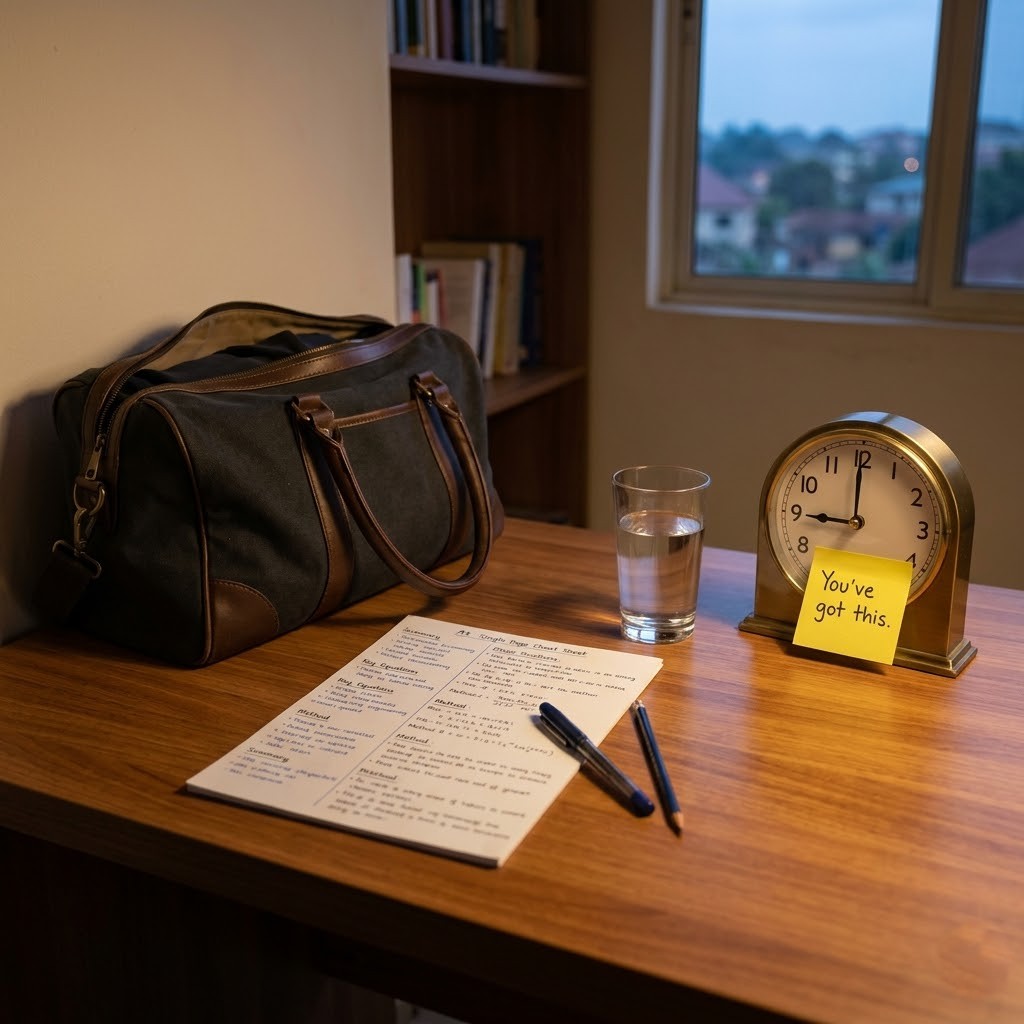
- Stop revision by 8pm or 9pm.
- Review your cheat sheet – 10 minutes.
- Pack your bag.
- Eat a proper meal.
- In bed by 9:30pm.
- Tell yourself: “I’m ready. Not perfect – ready.”
What to Say to Yourself When Doubt Creeps In
| Doubt thought | Confidence reframe |
|---|---|
| “I’m going to fail.” | “I’ve prepared for this. I’ll do my best.” |
| “Everyone else knows more.” | “I don’t know what they know. I know what I know.” |
| “I should change this answer.” | “Unless I have a clear reason, I trust my first answer.” |
| “I’m stuck – I’ve ruined everything.” | “One question doesn’t decide my grade. I’ll come back.” |
A Note to Parents

Your child’s confidence is fragile right now. Here’s how to protect it:
- Don’t say: “Why are you so nervous? You know this.”
- Do say: “It makes sense to feel nervous. You’ve worked hard.”
- Don’t say: “Everyone else is coping.”
- Do say: “I’m proud of you for showing up. That’s already brave.”
- Don’t say: “You should have revised more.”
- Do say: “What do you need right now? A break? Food? A hug?”
Confidence doesn’t come from pressure. It comes from safety.
The Bottom Line
Confidence is not a personality trait. It’s a performance tool.
- It speeds up recall.
- It reduces second‑guessing.
- It frees up brain space for problem‑solving.
- It helps you trust the work you’ve already done.
You don’t need to be the loudest person in the room. You just need to trust yourself.
You’ve done the revision. Now trust the process.
Leave a Reply