
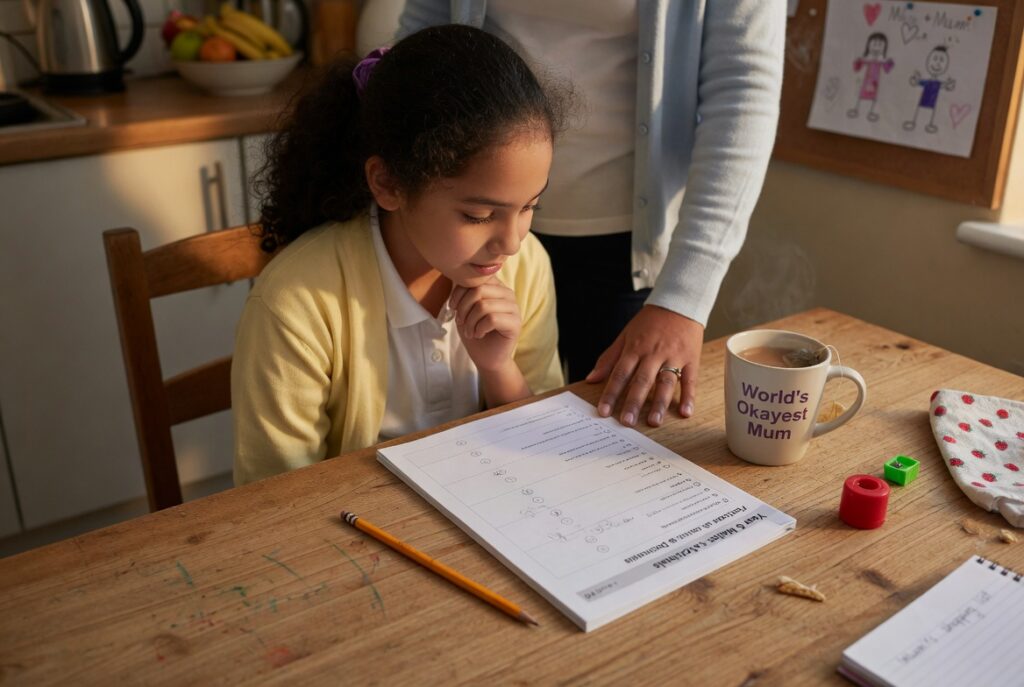
Introduction: The Marks That Slip Away
You’ve done the revision. You’ve practised the times tables, the fractions, the word problems. Your child walks into the SATs maths papers feeling ready.
Then the results come. And there it is: a score lower than expected.
What happened?
Every year, examiners release their reports. And every year, the same pattern emerges. Thousands of Year 6 children lose marks on the same few question types – not because the maths is too hard, but because these questions have hidden traps that catch even confident students.
The good news? Once you know the traps, you can avoid them.
This guide walks you through the 5 most common SATs maths question traps – and gives you simple, practical fixes for each one.
Question 1: Fractions of Amounts – The “Wrong Part” Trap
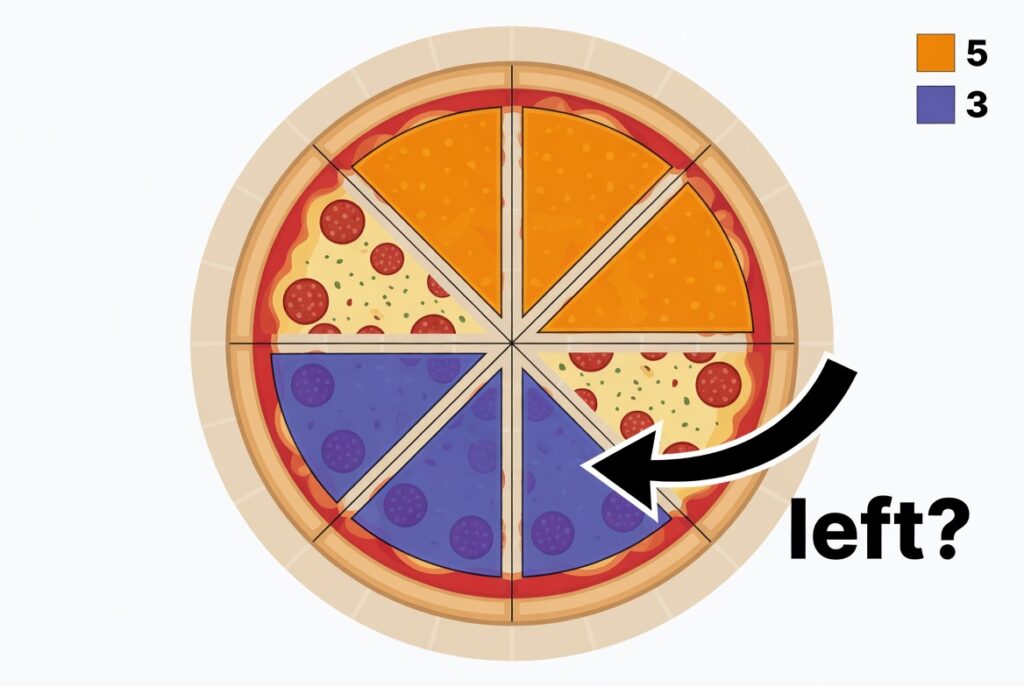
The Question That Trips Students Up:
*”A pizza has 8 slices. 5/8 of the pizza is eaten. How many slices are left?”*
What Students Often Do Wrong:
They calculate 5/8 of 8 = 5, and confidently write “5” as the answer.
Why It’s Wrong:
5 is the number of slices eaten. The question asked for slices left.
The Fix:
- Step 1: Circle the key word in the question – here, it’s “left”.
- Step 2: Find the fraction that answers that word. If 5/8 are eaten, then the fraction left is 8/8 − 5/8 = 3/8.
- Step 3: Calculate 3/8 of 8 = 3 slices left.
Pro Tip for Parents: Before your child calculates anything, ask: “What is the question actually asking for?” This 5-second check saves marks every time.
Question 2: Two-Step Word Problems – The “Stop Halfway” Trap
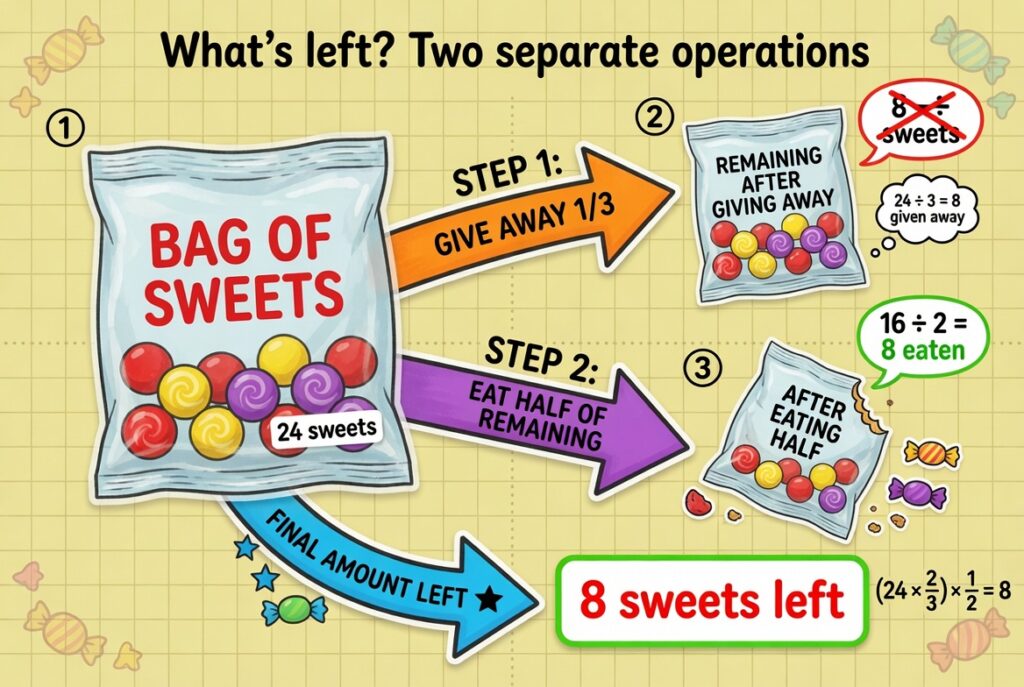
The Question That Trips Students Up:
*”A bag contains 24 sweets. 1/3 of the sweets are given away. Half of the remaining sweets are eaten. How many sweets are left?”*
What Students Often Do Wrong:
They calculate 1/3 of 24 = 8 given away, and stop. They write “8” or “16” (the remaining after step 1) and move on.
Why It’s Wrong:
The question has two steps. Stopping after the first step ignores the second instruction entirely.
The Fix:
- Step 1: Read the whole problem first. Underline the final question sentence.
- Step 2: Work through step by step, writing each result down:
- 24 sweets − 8 given away = 16 remaining
- Half of 16 eaten = 8 eaten
- 16 remaining − 8 eaten = 8 sweets left
- Step 3: Check: Does your answer answer the final underlined sentence?
Pro Tip for Parents: Teach your child to draw a simple “story map” – a box for each step. It makes two-step problems visual and much harder to mess up.
Question 3: Time Intervals – The “Minute Counting” Trap
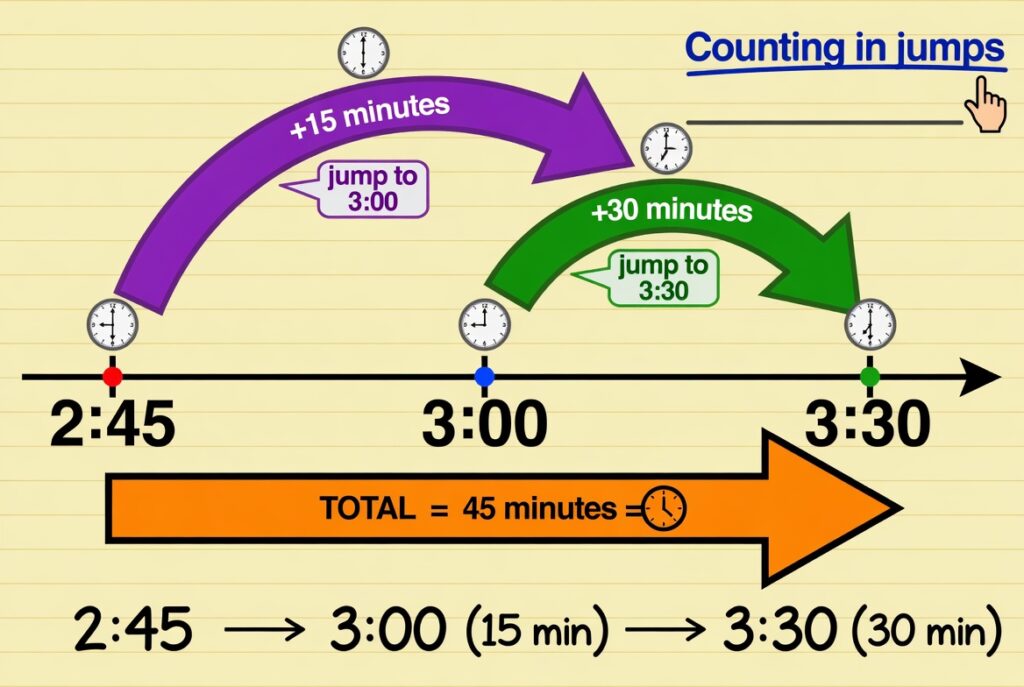
The Question That Trips Students Up:
“A film starts at 2:45pm and ends at 3:30pm. How long is the film?”
What Students Often Do Wrong:
They try to count minutes directly (2:45 to 3:30 = 45 minutes) but get confused by the 2:45 starting point. They might count 2:45 as a full minute or lose track at the hour boundary.
Why It’s Wrong:
Direct minute-counting often leads to off-by-one errors, especially when the start time isn’t on a full hour.
The Fix:
- Step 1: Count in jumps to the next hour:
- 2:45 → 3:00 = 15 minutes
- Step 2: Count from that hour to the end time:
- 3:00 → 3:30 = 30 minutes
- Step 3: Add the jumps:
- 15 + 30 = 45 minutes
Pro Tip for Parents: Draw a simple number line. It turns time intervals into a visual, step-by-step process that children can follow easily.
Question 4: Fractions of Shapes – The “Shaded Only” Trap
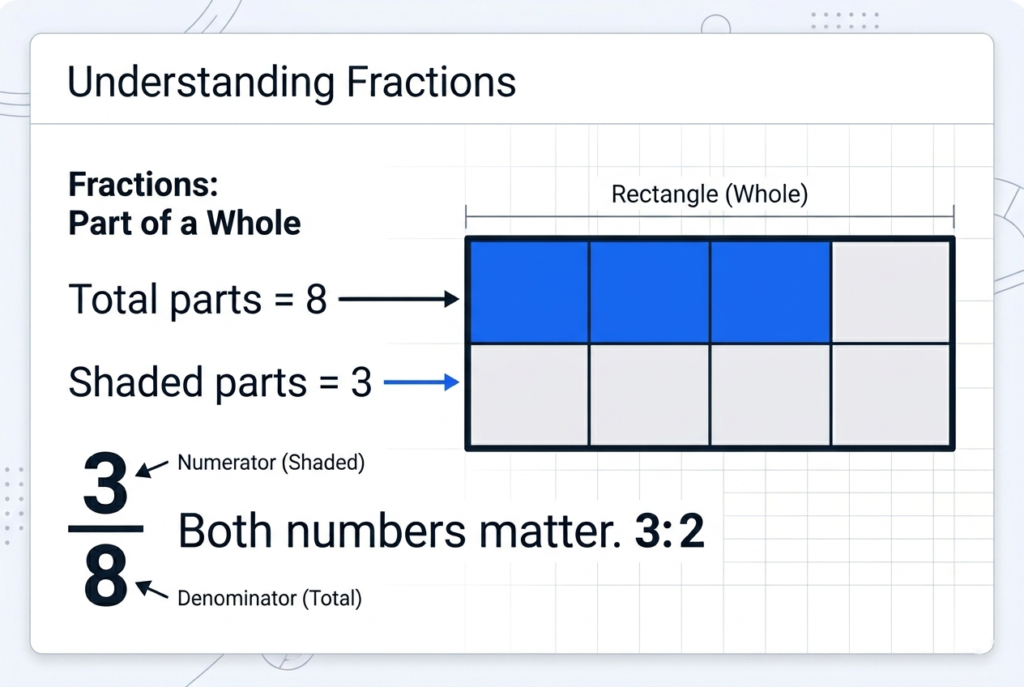
The Question That Trips Students Up:
[A shape divided into equal parts, with some parts shaded. The question asks: “What fraction of the shape is shaded?”]
What Students Often Do Wrong:
They count the shaded parts (e.g., 3) and write “3” – forgetting the total number of parts entirely.
Why It’s Wrong:
A fraction needs two numbers: the shaded parts AND the total parts. Writing just the shaded parts is not a fraction.
The Fix:
- Step 1: Ask: “How many equal parts in total?” Write that number down.
- Step 2: Ask: “How many parts are shaded?” Write that number down.
- Step 3: Write the fraction: shaded/total. Simplify if needed.
Pro Tip for Parents: Use real objects – a chocolate bar, a pizza drawing, a sliced apple – to make “total parts” visual and concrete.
Question 5: Bar Chart & Graph Reading – The “Scale Skip” Trap
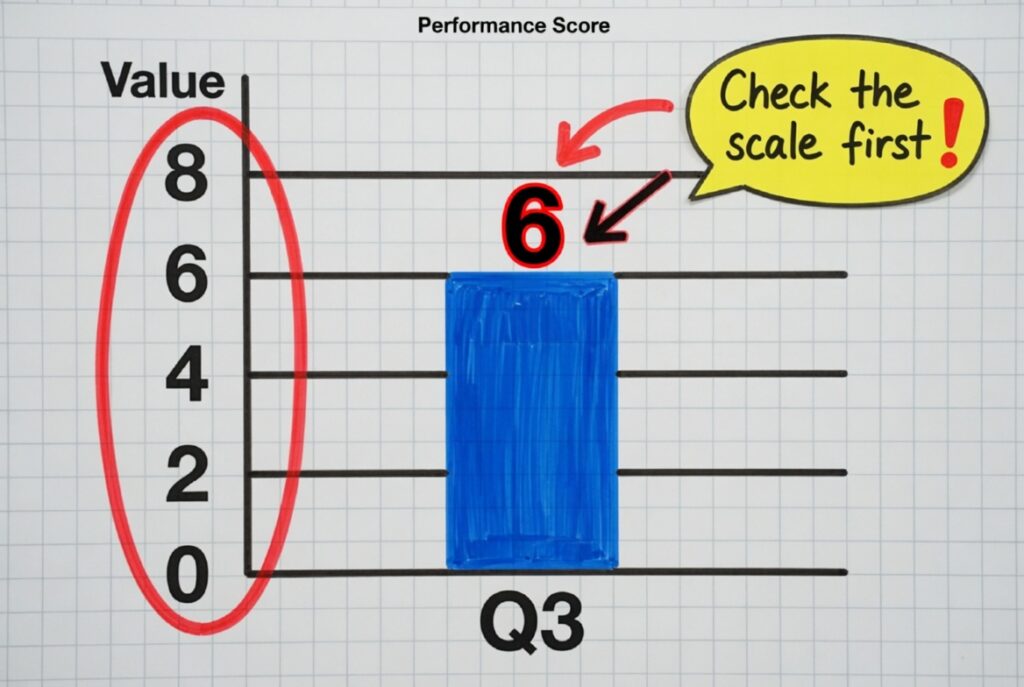
The Question That Trips Students Up:
[A bar chart showing favourite fruits. The scale on the left goes up in 2s. The question asks: “How many children chose apples?”]
What Students Often Do Wrong:
They count each line on the scale as “1”, even when the scale clearly says 2, 5, or 10. They might read a bar that reaches the 3rd line as “3” when it’s actually “6”.
Why It’s Wrong:
SATs bar charts often use scales of 2, 5, 10, or even 20. Counting line by line without checking the scale gives a completely wrong answer.
The Fix:
- Step 1: Before reading any value, look at the scale. What does each line represent?
- Step 2: Write it down: “Each line = 2” (or 5, or 10).
- Step 3: Count in those steps, not in ones.
Pro Tip for Parents: Practice with real graphs – weather temperature charts, sports scores, anything with a scale. Ask: “What’s the first thing you check before reading a bar chart?”
The Common Thread: Reading, Steps, and Checking
If you look closely at all five questions, a pattern emerges. Students lose marks not because the maths is too hard, but because:
- They rush and miss the key word (eaten vs left, shaded vs total)
- They stop halfway (one step instead of two)
- They skip the scale (counting lines instead of checking values)
The solution is not more revision. It’s better technique.
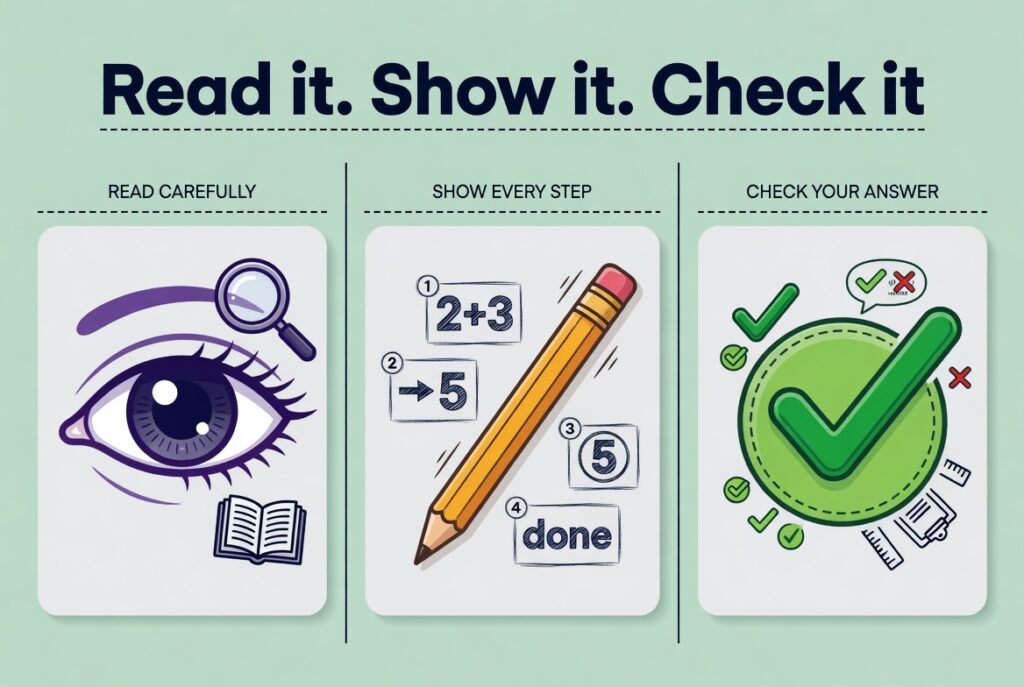
- Read the question twice. Circle the key instruction.
- Show every step. Write down each calculation.
- Check your answer against the question. Does it actually answer what they asked?
How Royale Tutors Helps Year 6 Children Close These Gaps
At Royale Tutors, we don’t just teach maths content. We teach students how to read SATs questions, avoid common traps, and maximise every mark.
In our SATs preparation sessions, students:
- Practise exactly these high-error question types
- Learn to spot the “trap” before they fall into it
- Build step-by-step methods that work every time
- Gain confidence through repeated, guided practice
The result? Your child stops losing marks on questions they actually know how to solve.
Conclusion: Try One Question Tonight
You don’t need to master all five tonight.
Pick one. The fraction trap. The two-step problem. The time interval. The shape fraction. The bar chart scale.
Spend 10 minutes on it. Work through the fix together. Then find a similar question online and try it again.
Small steps, repeated, turn tricky questions into easy marks.
-
Panic‑Revising at 2am Won’t Save Your Grade. Here’s What Actually Works When Time Is Running Out.
Introduction: The Last‑Minute Panic It’s the night before the exam. Or maybe two nights before. You have a textbook open, a highlighter in your hand, and a rising sense of dread. You’ve left it late. You know you should have started earlier. But…
-
Title: You Knew the Topic. You Revised for Hours. So Why Did You Lose Marks? These 5 Mistakes Are the Reason.
Introduction: The Frustration of Lost Marks You walk out of the exam hall feeling good. You answered every question. You recognised the topics. You feel… relieved. Then the results arrive. The grade is lower than you expected. Lower than your mocks. What happened?…

Leave a Reply