

Introduction: The Marks You Never Knew You Had
Imagine walking out of an exam and realising you left 10% of your potential on the table. Not because you didn’t know the answers. Not because you didn’t revise. But because of how you approached the paper.
Now imagine getting those marks back. What would that do to your final grade?
For most GCSE students, that 10% is the difference between a 6 and a 7. Between a 7 and an 8. Between “I did okay” and “I’m proud of that.”
Here’s the truth they don’t tell you in revision guides: Knowledge is the price of entry. Technique is how you win.
This guide reveals five exam techniques that cost you nothing to implement but can unlock marks you didn’t even know you were leaving behind.
Technique #1: The Command Word Decoder Ring
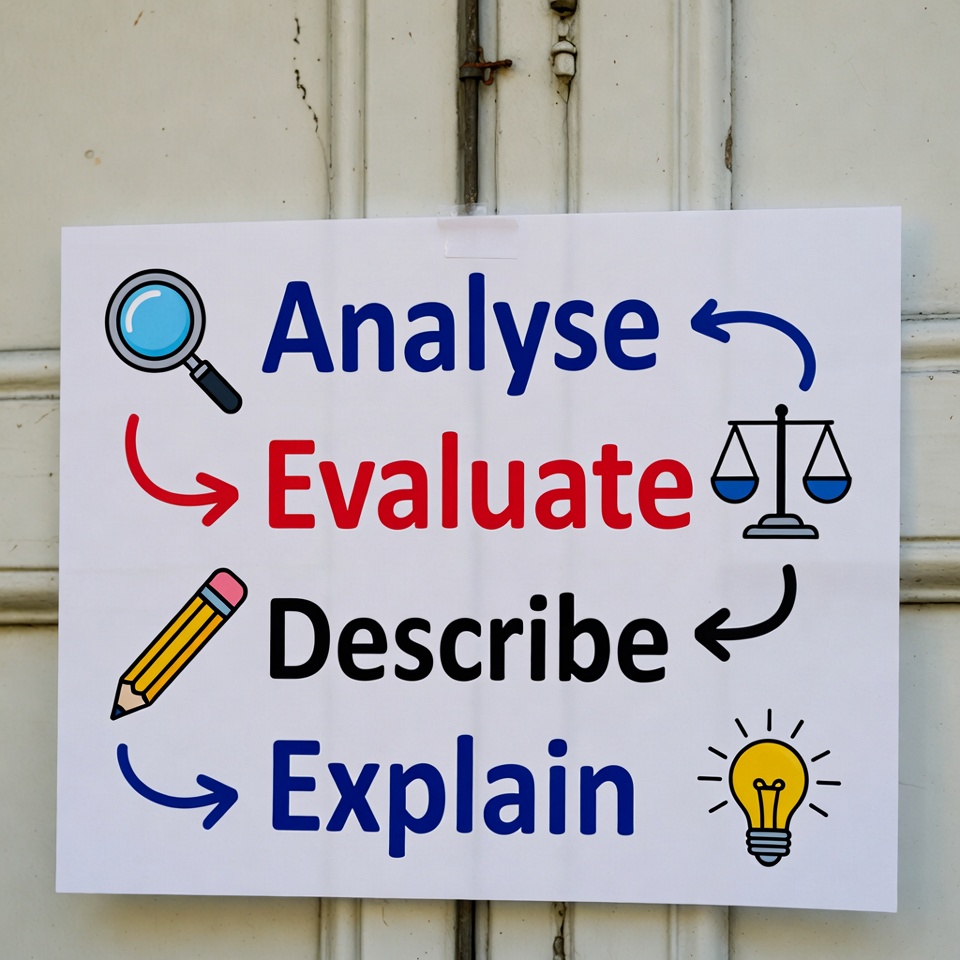
Most students lose marks not because they don’t know the topic, but because they answer a question the examiner never asked.
Every exam question contains a hidden instruction: the command word. And each command word demands a different type of response.
The Mistake:
Treating every question the same. Writing everything you know and hoping the examiner finds the right bits.
The Fix:
Create a command word decoder ring. Before you enter the exam hall, know exactly what each word requires:
- Describe: “Paint a picture with words. What happened? What did it look like? Give the details, but don’t explain why.”
- Explain: “Give reasons. Why did it happen? What caused this? Show me you understand the relationship between events.”
- Analyse: “Break it down. Examine the parts. How do they fit together? What are the implications?”
- Evaluate: “Make a judgement. What are the strengths and weaknesses? How successful was it? And most importantly—why do you think that?”
- Compare: “Find similarities AND differences. Don’t just list them; show me you understand the relationship.”
The 10% Gain:
When you match your answer structure to the command word, you immediately signal to the examiner that you understand the task. This alignment alone can lift you into higher mark bands.
Technique #2: The 2-Minute Investment
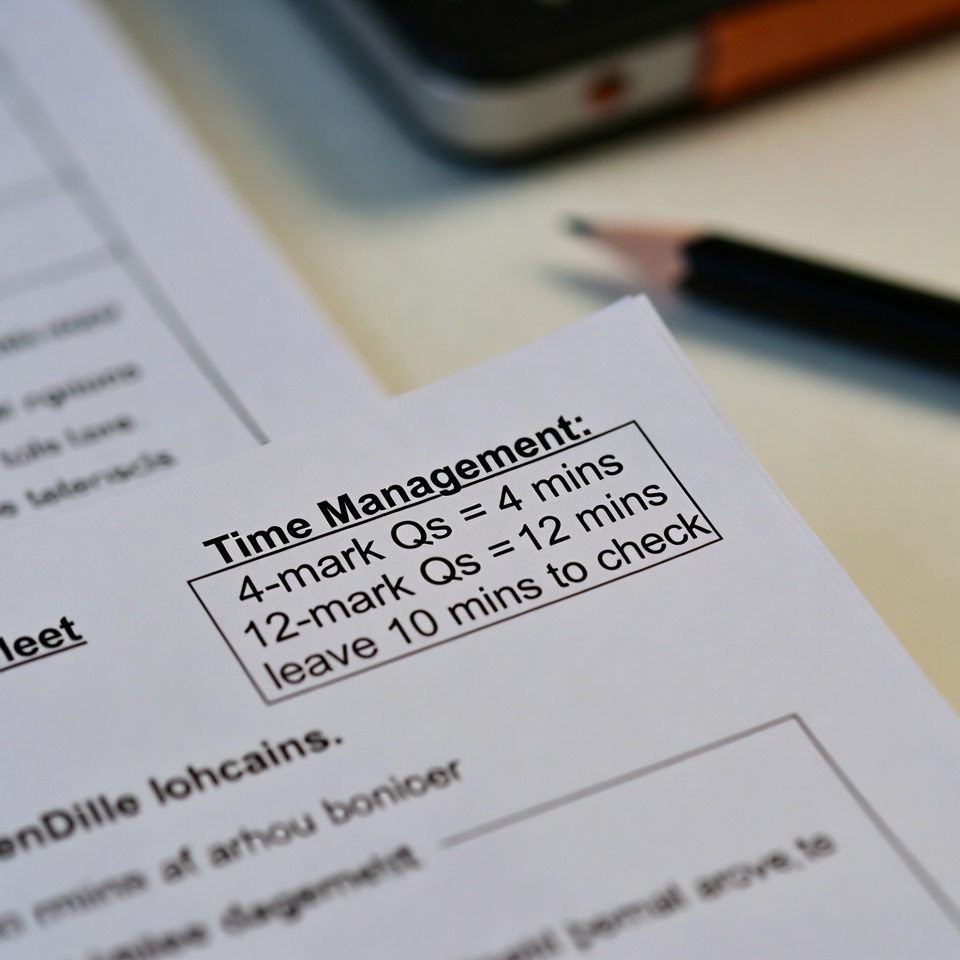
The exam clock starts. Adrenaline surges. Most students dive straight into question one, writing furiously, hoping to beat the clock.
This is a trap.
The Mistake:
Starting before you have a plan. Flying blind and hoping for the best.
The Fix:
Invest the first two minutes of every exam in a ritual called The Scan.
- Flip through the entire paper. Get a sense of the landscape. How many sections? How many marks for each?
- Do the maths. Calculate your minutes per mark. (Total time ÷ Total marks = Minutes per mark.)
- Identify the “golden questions.” Which ones are worth the most marks? Circle them. These are your priority.
- Note the “tricky ones.” Which questions look hard? Put a small star next to them so you know to come back if you have time.
The 10% Gain:
Those two minutes feel like a sacrifice. They’re not. They’re an investment. Students who scan first finish stronger because they’ve allocated their energy intelligently. They don’t run out of time on the high-value questions. They don’t panic when they hit a hard one because they expected it.
Technique #3: The “Show Your Working” Safety Net
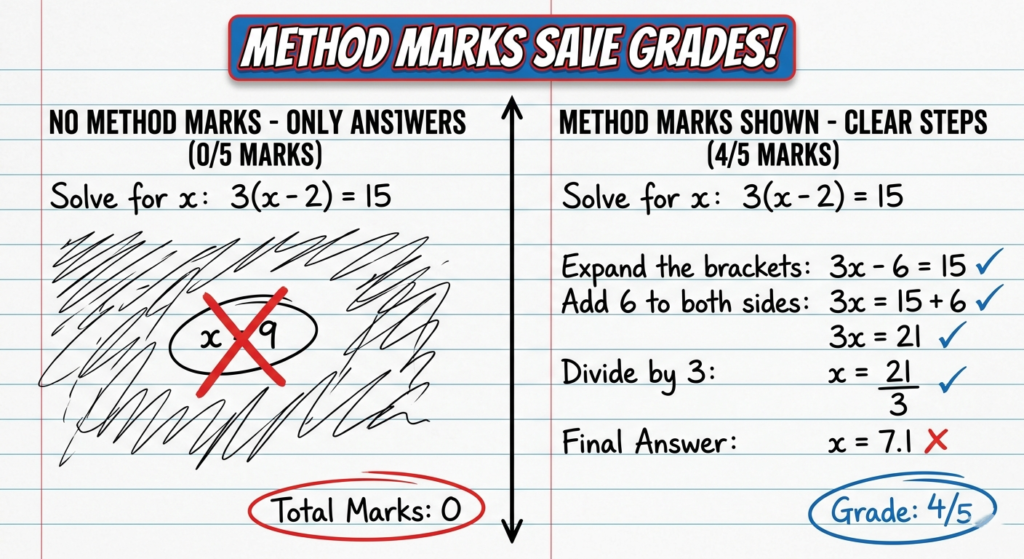
In Maths and Science, the final answer is not the only thing that matters. In fact, sometimes it’s not even the main thing.
Examiners are trained to give you credit for what you do know. If you make a small slip in a calculation but your method was perfect, you can still get 4 out of 5 marks. But only if you show your working.
The Mistake:
Doing calculations in your head. Assuming the examiner can read your mind.
The Fix: Adopt the “Think Aloud on Paper” Method.
Write down every step as if you’re explaining it to someone who has no idea what you’re doing.
- “First, I calculated the mean by adding all values and dividing by 5.”
- “This gave me 15.2.”
- “Then, I subtracted the lowest value (4) from the highest value (22) to find the range.”
- “The range is 18.”
The 10% Gain:
Even if your final answer is wrong, you’ve built a safety net. Method marks catch you. In some questions, the method marks outweigh the answer marks. By showing your working, you ensure that a small slip doesn’t become a total loss.
Technique #4: The 5-Minute Harvest

You’ve finished. The relief is overwhelming. You put your pen down and wait for the clock to run out.
In those final five minutes, marks are sitting on the table, waiting to be picked up. But most students leave them there.
The Mistake:
Checking out mentally before the exam is over.
The Fix: The 5-Minute Harvest Protocol
With 5-10 minutes left, you enter a new phase: The Harvest. Your only job is to find easy marks.
- Scan for the obvious. Did you miss a question entirely? Is there a blank space? Fill it with something. A partially correct answer is better than no answer.
- Check your calculations. In Maths and Science, quickly re-read your method. Does that subtraction look right? Did you carry the number correctly?
- Read your written answers aloud in your head. Does that sentence make sense? Is there a word missing? Did you actually answer the question they asked?
- Look at command words again. Go back to every question and check: Did you do what they asked? If they said “evaluate,” did you give a judgement? If they said “compare,” did you find similarities and differences?
The 10% Gain:
These five minutes are the highest-leverage time in the entire exam. They cost you no new knowledge, no additional effort. They’re simply about harvesting what you’ve already sown.
Technique #5: The Memory Unlock Protocol

It’s the most terrifying exam feeling. Your mind goes blank. The thing you revised yesterday, the thing you know you know—it’s gone.
Why It Happens:
Stress triggers your body’s fight-or-flight response. When that happens, your brain prioritises survival over recall. The information is still there; your brain has just locked the door to protect you from the “threat” (the exam).
The Mistake:
Panicking. Pounding your head. Making the stress worse.
The Fix: The Memory Unlock Protocol
When your mind goes blank, follow these steps:
- Breathe. Take three deep, slow breaths. Count to four in, hold for four, out for four. Oxygen is fuel for your brain. Panic starves it.
- Move on. Answering another question can sometimes unlock the first one. Your brain works in the background. By the time you come back, the door may have opened.
- Trigger the memory. Think about where you were when you revised it. What page of your notebook? What colour pen did you use? What was happening in the room? These contextual clues can sometimes pick the lock.
- Write something. Anything. Start writing about the topic, even if it’s not the exact answer. Sometimes the act of writing primes the pump, and the answer flows out.
The 10% Gain:
By managing your stress response, you protect your access to the knowledge you’ve worked so hard to build. You don’t leave marks on the table simply because your brain temporarily locked them away.
How Royale Tutors Builds Bulletproof Exam Technique
Reading about these techniques is the first step. But breaking years of habit requires practice—and feedback.
This is where Royale Tutors makes the difference.
A great tutor doesn’t just re-explain content. They watch how you work. They sit beside you (in person or online) as you tackle past papers and they spot the exact moment you:
- Misread a command word
- Get trapped by a time-sucking question
- Hide your working from the examiner
- Check out mentally before the harvest
- Panic and lock your own memory
And they give you immediate, specific feedback that rewires your approach.
The result? You walk into that exam hall not just with knowledge, but with a strategy. You know how to decode the questions, manage the clock, show your working, harvest your marks, and protect your memory under pressure.
You stop hoping for the best and start executing a plan.
Conclusion: The Marks Are Waiting. Will You Take Them?

The difference between a grade you’re embarrassed by and a grade you’re proud of is often not more revision. It’s not more late nights. It’s not more stress.
It’s technique.
It’s knowing that command words are instructions, not suggestions.
It’s investing two minutes to save ten.
It’s showing your working so method marks catch you when you fall.
It’s harvesting in the final five minutes what you’ve already earned.
It’s breathing through the panic so your memory stays unlocked.
These techniques cost you nothing. They require no additional knowledge. They simply ask you to be strategic.
And when you combine them with deep subject knowledge and the right support? That’s when grades transform.
Ready to build an exam strategy that works? Let’s talk.
Leave a Reply