

Introduction: The Crushing Feeling of “I Knew That”
You know the feeling. You walk out of the exam hall, and suddenly, the answer hits you. The date you couldn’t remember. The formula you second-guessed. The simple calculation you rushed and got wrong.
It’s a specific kind of heartbreak. Not because you didn’t study. Not because you didn’t care. But because in the pressure of the moment, you made a mistake you knew better than to make.
Here’s the truth that separates good students from great ones: Knowledge gets you in the door. Exam technique gets you the grade.
In this guide, we’re uncovering the five most common exam mistakes that cost GCSE students thousands of marks every year—and exactly how to stop making them.
Mistake #1: The Rush to Read (And Why It’s Costing You)
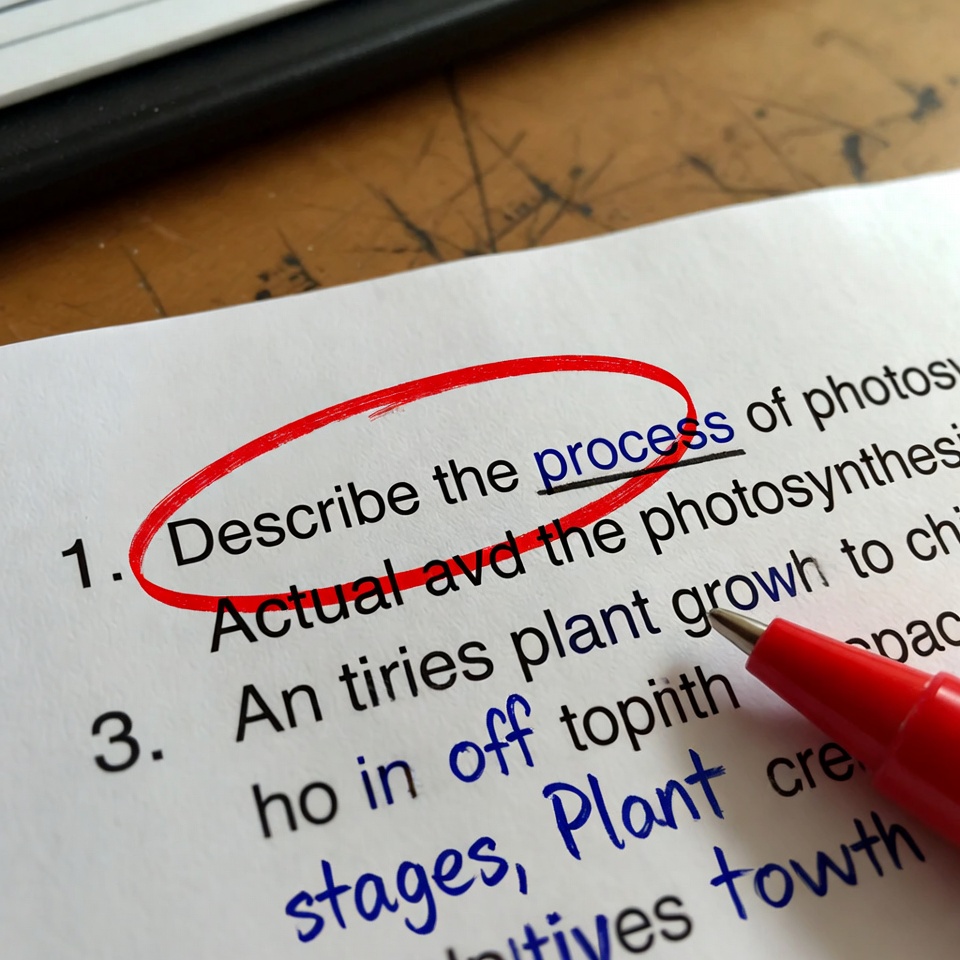
It happens in seconds. The exam starts, adrenaline hits, and your eyes scan the page. You spot a familiar word, a keyword you revised last night, and your brain screams, “I KNOW THIS!” You start writing. You write everything you know. You feel great. Then you read the question again. And your heart sinks.
They didn’t ask you to “describe.” They asked you to “evaluate.” They didn’t want the causes of the war; they wanted the consequences.
Why It Happens:
Panic narrows your focus. When you’re stressed, your brain looks for shortcuts—familiar landmarks—and ignores the details. You see what you expect to see, not what’s actually there.
The Fix: The Pencil Rule
Before you write a single word, put your pencil down on the desk. Pick it up only after you have:
- Read the question twice.
- Underlined the command word (analyse, evaluate, describe, calculate).
- Circled the key topic words.
This three-second pause can save you 3-6 marks per question. Across an entire paper, that’s a grade boundary.
Mistake #2: The Time Trap (When One Question Steals from Many)
You’re halfway through the paper, and you hit a question you really want to get right. It’s your topic. You know this. You’re not leaving until you’ve nailed it.
Twenty minutes later, you’ve written a masterpiece. But you’ve also got 15 minutes left for the final 30-mark essay.
Why It Happens:
We’re emotionally invested in getting hard questions right. We feel that if we just try harder, we can force the answer out. But exams are a game of limited resources, and time is the most precious one.
The Fix: The Mark-Per-Minute Rule
Before the exam, do this calculation: Total minutes ÷ Total marks = Minutes per mark.
- If you have 90 minutes for 90 marks, you have 1 minute per mark.
- A 4-mark question should take 4 minutes. MAX.
- A 12-mark question should take 12 minutes.
Put your watch on the desk. Check it after every question. When your time for that question is up, leave a space, circle the question number, and move on. You can come back if there’s time. A partially completed 20-mark essay at the end is a disaster. A skipped 4-mark question that you return to is a minor, calculated loss.
Mistake #3: The Invisible Working (Marks You Earned But Never Got)
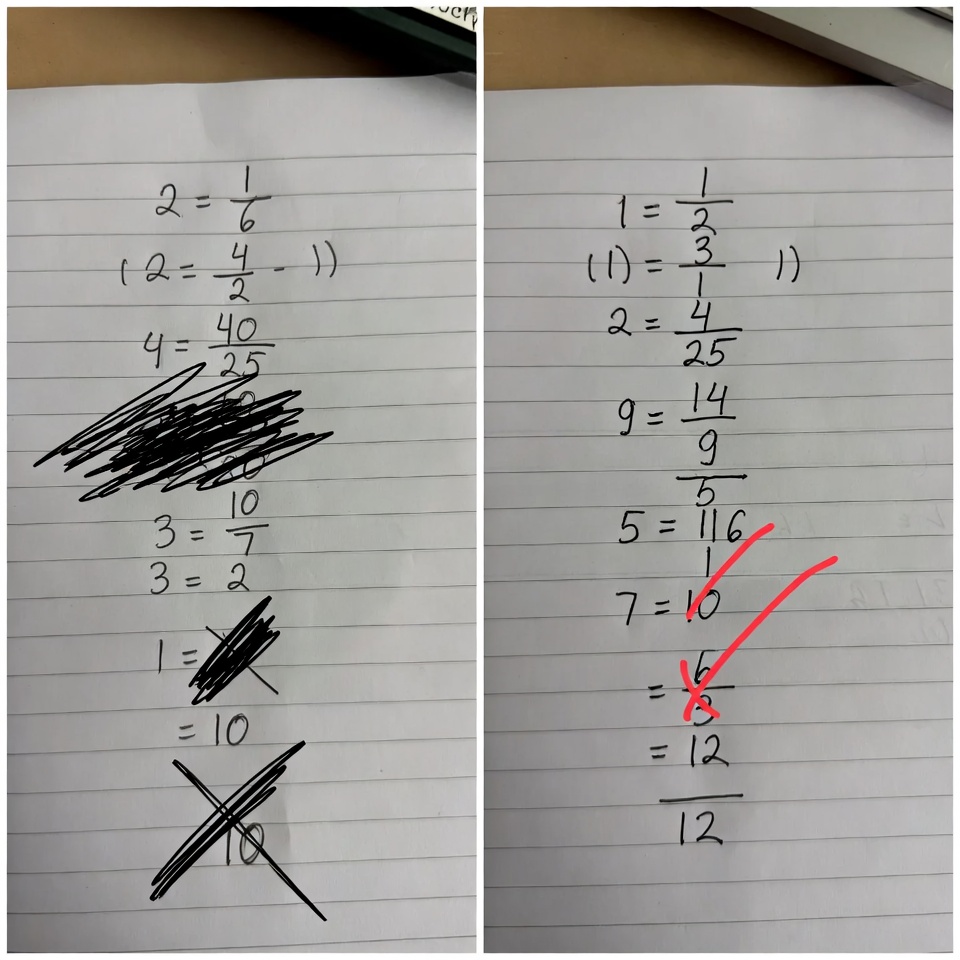
In Maths and Science, the final answer is not the only thing that matters. In fact, sometimes it’s not even the main thing.
Examiners are trained to give you credit for what you do know. If you make a small slip in a calculation but your method was perfect, you can still get 4 out of 5 marks. But only if you show your working.
Why Students Don’t Do It:
- “I’ll do it in my head and come back to write it down.” (You won’t. You’ll forget.)
- “It looks messy.” (Messy working with marks > Clean working with no marks.)
- “I didn’t have time.” (See Mistake #2.)
The Fix: Tell the Story
Approach every calculation as if you’re writing a story for someone who can’t read your mind. Every step is a sentence.
- “First, I calculated the mean…”
- “Then, I subtracted the lowest value…”
- “This gave me 15, which I then multiplied by…”
If your final answer is wrong but your story is right, you still get paid.
Mistake #4: The “Good Enough” Finish (Why the Last 5 Minutes Are Golden)

You’ve finished. The relief is overwhelming. You put your pen down and stare into the middle distance, waiting for the clock to run out.
In those final five minutes, marks are sitting on the table, waiting to be picked up. But most students leave them there.
Why Students Don’t Check:
- Mental exhaustion. You’re done. Your brain has checked out.
- Overconfidence. “I’m sure it’s fine.”
- Fear of what you’ll find. (This is real. Sometimes we don’t want to see our own mistakes.)
The Fix: The 5-Minute Harvest
With 5-10 minutes left, you enter a new phase of the exam: The Harvest. Your only job now is to find easy marks.
- Scan for obvious errors: Did you miss a question entirely? Is there a blank space? Fill it with something.
- Check your working: In maths, quickly re-read your method. Does that subtraction look right?
- Read your written answers: Does that sentence make sense? Is that word spelled correctly?
- Look at command words again: Did you actually do what they asked?
These five minutes are the highest-leverage time in the entire exam. Use them.
Mistake #5: The Memory Blank (And How to Prevent It)

It’s the most terrifying exam feeling. Your mind goes blank. The thing you revised yesterday, the thing you know you know—it’s gone.
Why It Happens:
Stress triggers your body’s fight-or-flight response. When that happens, your brain prioritises survival over recall. The information is still there; your brain has just locked the door to protect you from the “threat” (the exam).
The Fix: The Memory Unlock
When your mind goes blank:
- Do not panic. Panic locks the door tighter. Take three deep breaths. Oxygen helps your brain function.
- Move on. Answering another question can sometimes unlock the first one. Your brain works in the background.
- Trigger the memory. Think about where you were when you revised it. What page of your notebook? What colour pen did you use? These contextual clues can sometimes pick the lock.
How Personalised Tutoring Builds Bulletproof Exam Technique
Reading about these mistakes is the first step. But breaking years of habit requires practice, and feedback.
This is where Royale Tutors makes the difference.
A great tutor doesn’t just re-explain content. They watch how you work. They sit beside you (in person or online) as you tackle past papers and they spot the exact moment you:
- Misread a question
- Get trapped by time
- Hide your working
- Rush to finish
And they give you immediate, specific feedback that rewires your approach.
The result? You walk into that exam hall not just with knowledge, but with a strategy. You know how to read the paper, manage the clock, and harvest every mark you’ve earned.
Conclusion: From Knowledge to Grades

Strong exam performance isn’t magic. It isn’t luck. It’s the combination of deep knowledge and battle-tested technique.
By avoiding these five common mistakes—misreading questions, poor time management, invisible working, skipping checks, and freezing under pressure—you can stop leaking marks and start securing the grades your hard work deserves.
And if you want a guide in your corner, someone who will help you build that technique and believe in your ability… we’re here.
Ready to transform your exam technique? Let’s talk.
The 5 Marks You’re Leaving on the Table: A Guide to Avoiding Common GCSE Exam Mistakes
Introduction: The Crushing Feeling of “I Knew That” You know the feeling. You walk out of the exam hall, and suddenly, the answer hits you. The date you couldn’t remember. The formula you second-guessed. The simple calculation you rushed and got wrong. It’s a specific kind of heartbreak. Not because you didn’t study. Not because…
-
Panic‑Revising at 2am Won’t Save Your Grade. Here’s What Actually Works When Time Is Running Out.
Introduction: The Last‑Minute Panic It’s the night before the exam. Or maybe two nights before. You have a textbook open, a highlighter in your hand, and a rising sense of dread. You’ve left it late. You know you should have started earlier. But here you are. What do you do? Most students panic‑revise the wrong…
-
Title: You Knew the Topic. You Revised for Hours. So Why Did You Lose Marks? These 5 Mistakes Are the Reason.
Introduction: The Frustration of Lost Marks You walk out of the exam hall feeling good. You answered every question. You recognised the topics. You feel… relieved. Then the results arrive. The grade is lower than you expected. Lower than your mocks. What happened? In most cases, it wasn’t that you didn’t know the material. It…
-
Every Year, Thousands of Year 6 Children Lose Marks on These 5 SATs Maths Questions. Here’s How to Make Sure Yours Doesn’t.
Introduction: The Marks That Slip Away You’ve done the revision. You’ve practised the times tables, the fractions, the word problems. Your child walks into the SATs maths papers feeling ready. Then the results come. And there it is: a score lower than expected. What happened? Every year, examiners release their reports. And every year, the…
-
Can You Get All 5 of These GCSE Maths Questions Right? Most Students Can’t. Try Now.
Introduction: The Marks You Never Knew You Were Losing You revise for weeks. You understand the topic. You walk into the exam feeling ready. Then you get your results. And there it is: a grade lower than you expected. What happened? In most cases, it’s not that you didn’t know the maths. It’s that you…
-
Stop Wasting Time on ‘Revision’ That Doesn’t Work. A Simple 4‑Step Plan for GCSE & SATs.
Introduction: The Revision Myth That Hurts Students There’s a myth that good revision means long hours, early mornings, and a desk buried in paper. It doesn’t. In fact, students who try to revise for eight hours a day often burn out before the exam even starts. They become exhausted, anxious, and forgetful – the opposite…
-
The 5 GCSE Maths Questions That Trip Up Most Students (And How to Master Them)
Introduction: The Questions That Make Students Sweat Every year, GCSE maths examiners release their reports. And every year, the same patterns emerge. There are certain questions, specific topics, specific question styles, that consistently cause students to lose marks. Not because the maths is impossibly hard, but because these questions require a particular approach, a careful…
Leave a Reply