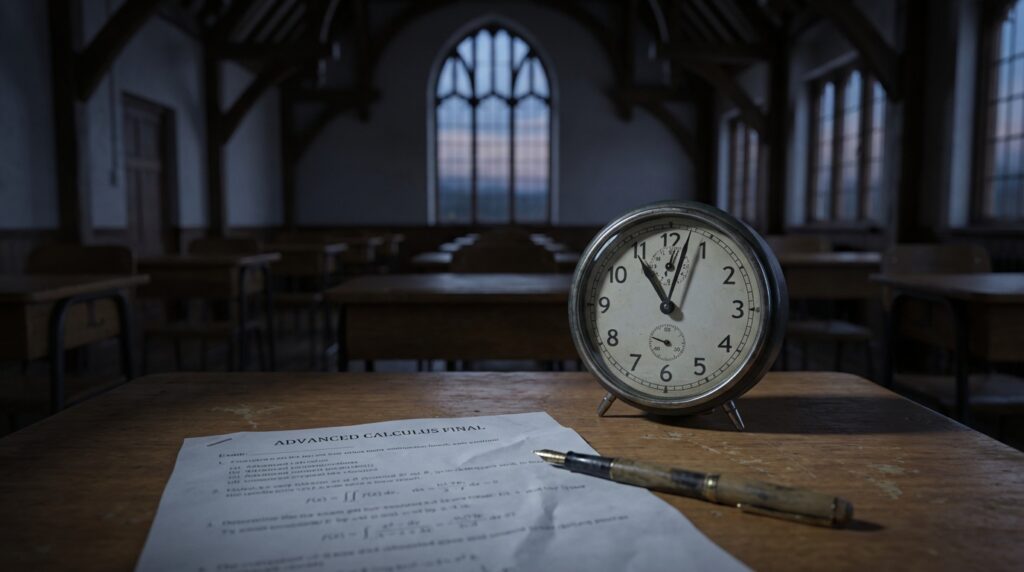
Imagine this: Your child walks out of the exam hall, relieved. They answered every question. They recognised the topics. They feel… okay.
Then the results arrive. The grade is lower than expected. Lower than their mocks. Lower than their understanding would suggest.
If this scenario sends a chill down your spine, you’re right to be concerned. It happens far more often than it should. The cruel truth is that many students lose 10%, 15%, even 20% of their marks not because they don’t know the material, but because of how they approach the paper.
These are not marks lost to a lack of intelligence or effort. They are marks lost to technique. And the good news? Technique is a skill. It can be taught, practised, and mastered. Here are the four most common exam technique errors that silently sabotage grades, and exactly how to fix them.
1. The Rush to Write: Misreading the Question
The clock starts ticking, adrenaline kicks in, and the pen hits the paper. It’s a scene played out in exam halls across the country. But in that rush, students often miss the single most important thing: what the question is actually asking.
- The Error: Scanning a question, spotting a familiar keyword, and launching into a pre-prepared answer that doesn’t fit.
- Why It Happens: Time pressure creates panic. Panic narrows focus. Students see what they expect to see, not what’s actually there.
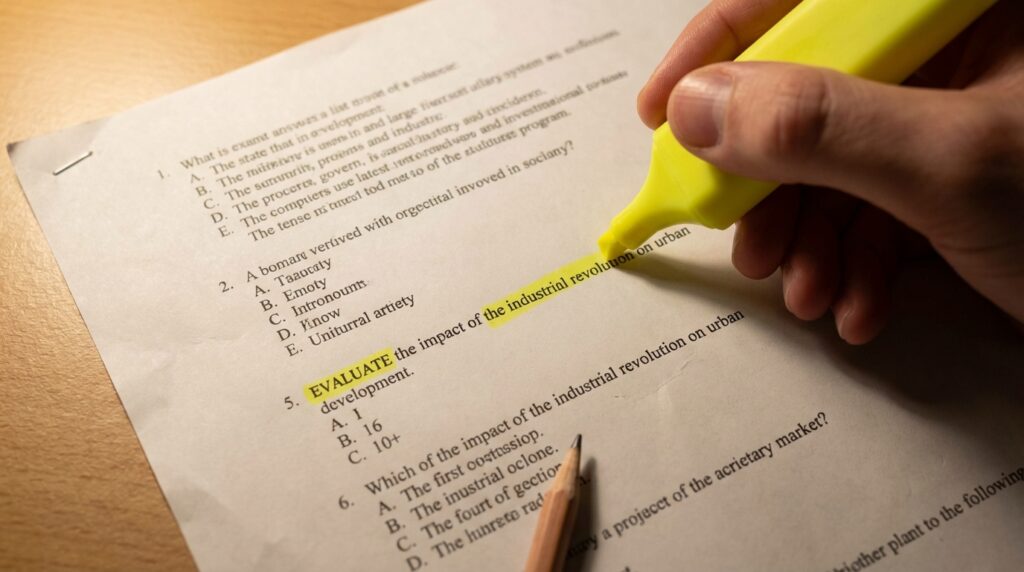
- The Fix: Teach your child to pause. Before they write a single word, they should read the question twice. The second time, they should physically underline the command word (e.g., “Analyse,” “Evaluate,” “Calculate”) and the key subject focus. This simple act forces the brain to process the instruction, transforming a reactive rush into a deliberate, accurate response.
2. The Mismatch: Answering the Wrong Question Correctly
This is perhaps the most frustrating error for both student and marker. A student might pour out perfectly accurate, well-structured information, but it’s for the wrong part of the question, or it misses the specific instruction.
- The Error: Explaining a concept when the question asks for a comparison. Giving a list of steps without providing the final calculated value. Writing a descriptive essay when the question demands an argument.
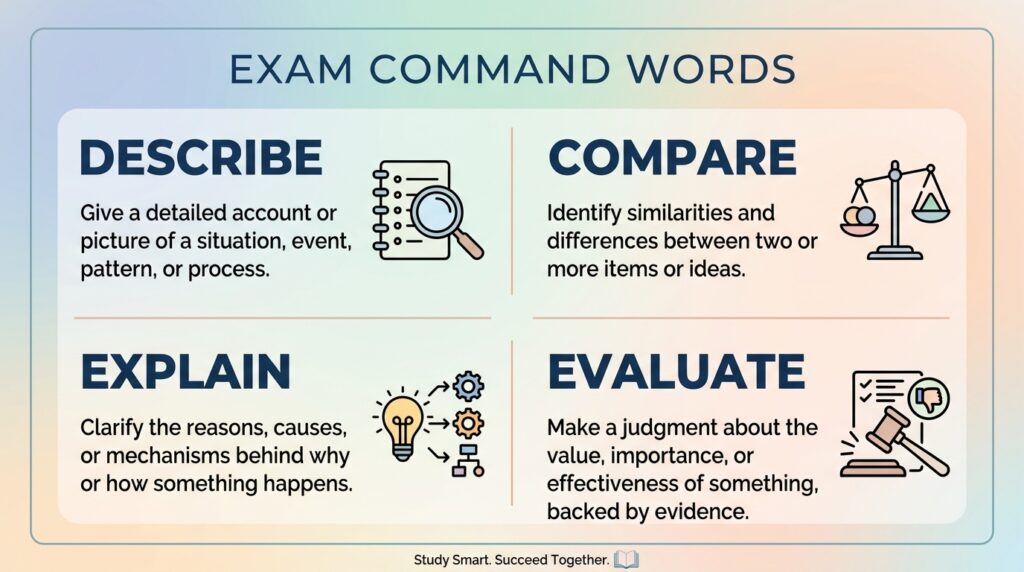
- Why It Happens: A lack of familiarity with “command words.” Students often treat all questions the same, not realising that “Describe” demands a completely different response to “Evaluate” or “Discuss.”
- The Fix: Create a simple command word cheat sheet. Keeping this sheet visible during revision trains the brain to recognise and respect the specific task.
3. The Time Trap: Losing Marks You Could Have Earned
We’ve all seen it: a student spends 25 minutes crafting a perfect answer to a 4-mark question, only to run out of time and rush through the final 12-mark essay. This isn’t just poor time management; it’s a strategic disaster.
- The Error: Investing a disproportionate amount of time on low-value questions, leaving insufficient time for high-value ones.
- Why It Happens: Students often feel they must finish a question once they’ve started. The fear of leaving something incomplete overrides strategic thinking.
- The Fix: The “Mark-Per-Minute” Rule. Before the exam begins, students should calculate roughly how much time they have per mark (e.g., 90 minutes for 90 marks = 1 minute per mark). They need a watch on their desk and the discipline to glance at it. If they’re stuck on a 3-mark question after 4 minutes, they must leave a space, circle it, and move on. A partially completed 12-mark question at the end is a disaster. A skipped 3-mark question that can be returned to is a minor, calculated loss.

4. The Invisible Working: Marks Hidden From the Examiner
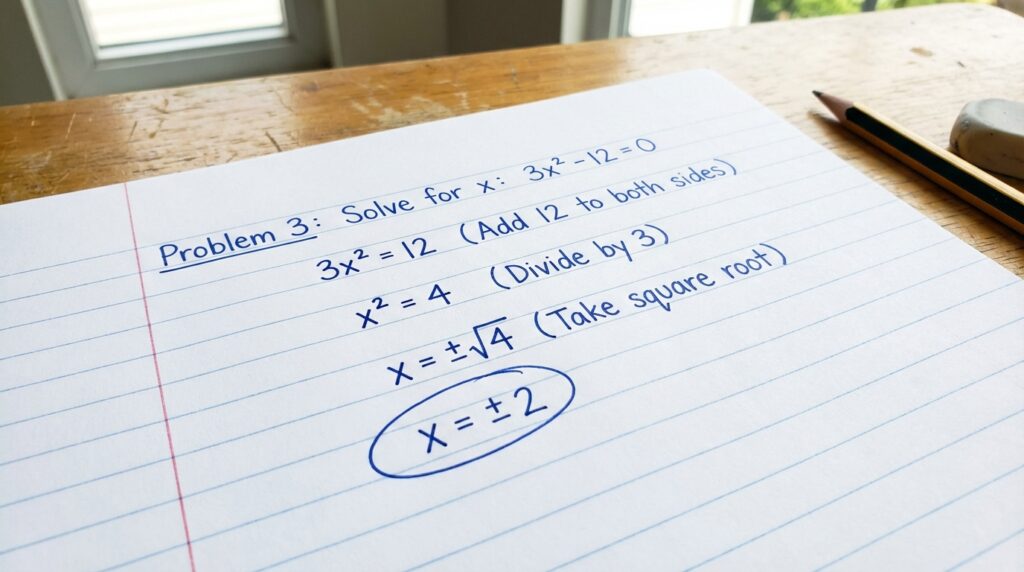
This error is particularly painful in subjects like Maths and Science. A student does the correct calculation in their head, writes down the final answer… and it’s wrong. They get zero.
- The Error: Not showing their working, or showing it messily.
- Why It Happens: Many students believe only the final answer matters. They don’t realise that exam mark schemes often award significant credit for the method, even if the final answer is incorrect.
- The Fix: Instil this mantra: “Show the story of your thinking.” Every step of a calculation, every logical leap, should be written down. If the final answer is wrong but the working shows they understood the correct process up to a point, they will still bank those precious method marks. Clear working also makes it easier to check answers at the end, catching careless errors.
How Personalised Tutoring Transforms Exam Technique
Identifying these errors is the first step. Fixing them requires targeted, consistent practice. This is where the true power of personalised tutoring comes into focus. It’s not just about re-teaching content; it’s about re-engineering the student’s approach to the exam itself.
At Royale Tutors, our experts don’t just work through past papers. They watch how a student works through them. They spot the exact moment a misreading happens, the second a student gets trapped by time, the instance where working isn’t shown. We provide immediate, specific feedback that rewires these habits.
The result? A student who walks into the exam hall not just with knowledge, but with a battle-tested strategy. They know how to read the question, manage the clock, and present their answers to maximise every single mark they’ve earned.

Conclusion: From Lost Marks to Maximum Marks
Exam technique isn’t a secret weapon reserved for the top students. It is a set of clear, learnable skills. By understanding these four common errors, misreading questions, mismatched answers, poor time management, and invisible working, your child can stop leaking marks and start securing the grades their knowledge deserves.
The difference between a grade 7 and a grade 8 is often not more revision. It’s better technique.
Ready to give your child the strategic advantage they deserve? Discover how Royale Tutors’ personalised approach can transform their exam performance.
Leave a Reply