

High-scoring students are often described as “naturally smart” or “gifted.” In reality, strong academic performance is rarely about natural ability alone. It is usually the result of consistent habits built over time.
Parents often wonder what high-performing students do differently. Students wonder why their hard work does not always translate into results.
The difference usually lies in how students study, not how long they study.
Below are some of the most common study habits shared by high-scoring students, and how others can begin to adopt them.
1. They Study With Clear Goals
High-scoring students rarely sit down to study without a plan.
Instead of vague intentions like “revise maths,” they set clear goals such as:
- Complete five algebra questions
- Review mistakes from the last test
- Master one specific topic
Clear goals make study sessions focused and measurable. Students know when they are finished and what progress they have made.
2. They Focus on Understanding, Not Memorisation
Top students prioritise understanding over memorising facts. They aim to understand:
- Why a method works
- How concepts connect
- When to apply specific techniques
This allows them to adapt their knowledge to unfamiliar exam questions rather than panic when questions are worded differently.
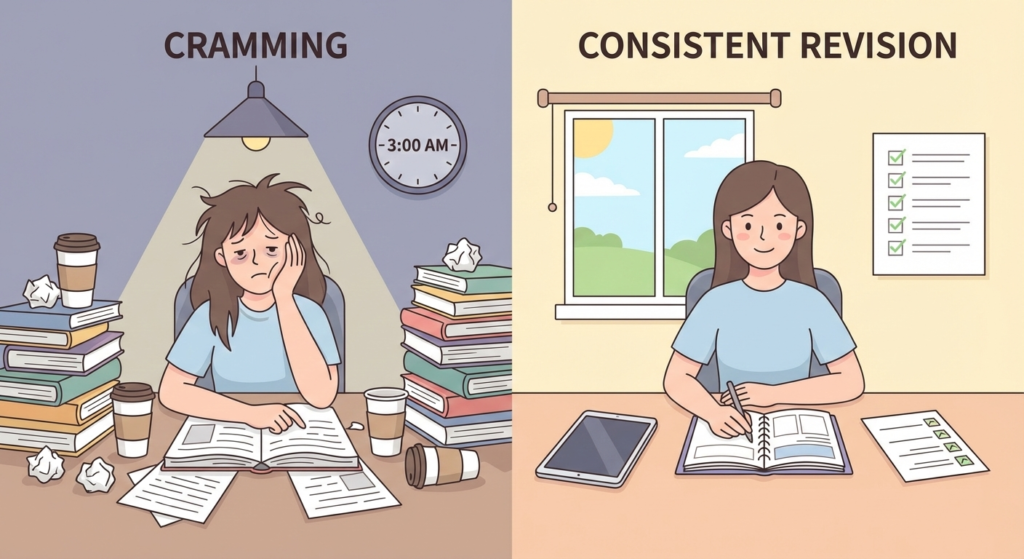
3. They Revise Consistently
High-scoring students avoid last-minute cramming.
They revise regularly in short, focused sessions. This consistency helps information move into long-term memory and reduces exam stress. Even small daily sessions can be more effective than long, irregular study hours.
4. They Use Active Study Techniques
Passive revision methods such as re-reading notes or highlighting pages are limited. High-performing students use active techniques like:
- Practice questions
- Flashcards
- Explaining concepts out loud
- Past exam papers
Active study strengthens recall and improves exam readiness.
5. They Learn From Their Mistakes
Mistakes are not ignored or rushed past. High-scoring students:
- Analyse incorrect answers
- Understand where they went wrong
- Practise similar questions again
This habit prevents repeated errors and builds confidence.
6. They Manage Their Time Effectively
Strong students understand the value of time. They:
- Break study into manageable sessions
- Take regular breaks
- Practise under timed conditions
This helps them stay focused and perform better during exams.
7. They Look After Their Wellbeing
Academic success is supported by good wellbeing. High-performing students:
- Get enough sleep
- Take breaks
- Balance study with rest
High academic performance is not about studying endlessly or being naturally gifted. It is about building effective habits that support understanding, consistency, and confidence.
With the right guidance, any student can develop these habits and improve their results.
Leave a Reply