
Introduction: The Revision Myth That Hurts Students
There’s a myth that good revision means long hours, early mornings, and a desk buried in paper. It doesn’t.
In fact, students who try to revise for eight hours a day often burn out before the exam even starts. They become exhausted, anxious, and forgetful – the opposite of what they need.
The truth? You don’t need more hours. You need a simple, realistic plan that fits around school, homework, and rest.
This guide gives you a four‑step revision plan that works for both GCSE and SATs students – without the overwhelm.
Step 1: Know What You’re Working With
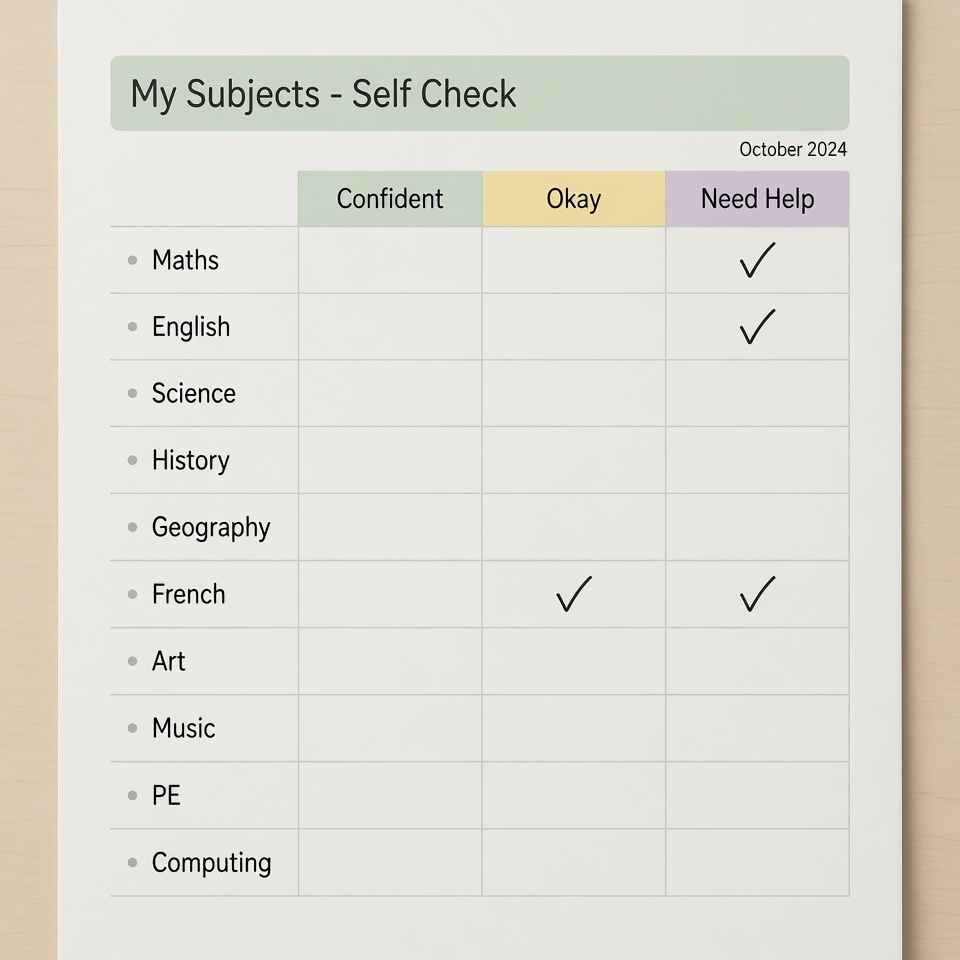
Before you plan, you need to know where you stand.
- List all your subjects. (For SATs, that’s usually Maths, Reading, GPS. For GCSEs, your chosen subjects.)
- Rate each one: 💚 Confident / 💛 Okay / ❤️ Needs real help.
Why this matters: Most students waste time revising what they already know. Your plan should focus firepower on the red subjects first.
Step 2: Use the 20‑Minute Block Method
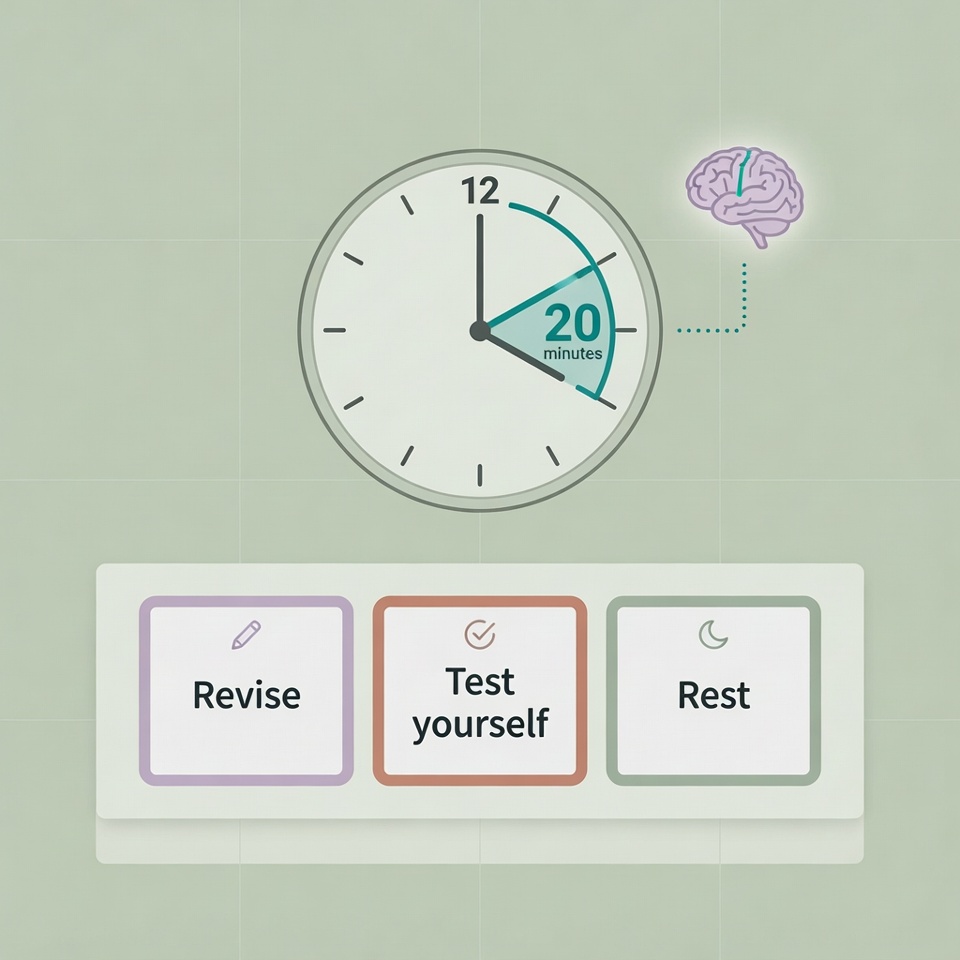
Your brain learns best in short, focused bursts. This is called spaced practice.
- Revise for 20 minutes – active methods only (past paper questions, flashcards, explaining aloud).
- Test yourself for 5 minutes – cover your notes and write down what you remember.
- Take a 5‑minute break – stand up, stretch, drink water.
Why it works: 20 minutes is long enough to dive deep, but short enough to stay focused. Testing yourself (not just reading) doubles how much you remember.
Step 3: Build Your Weekly Template
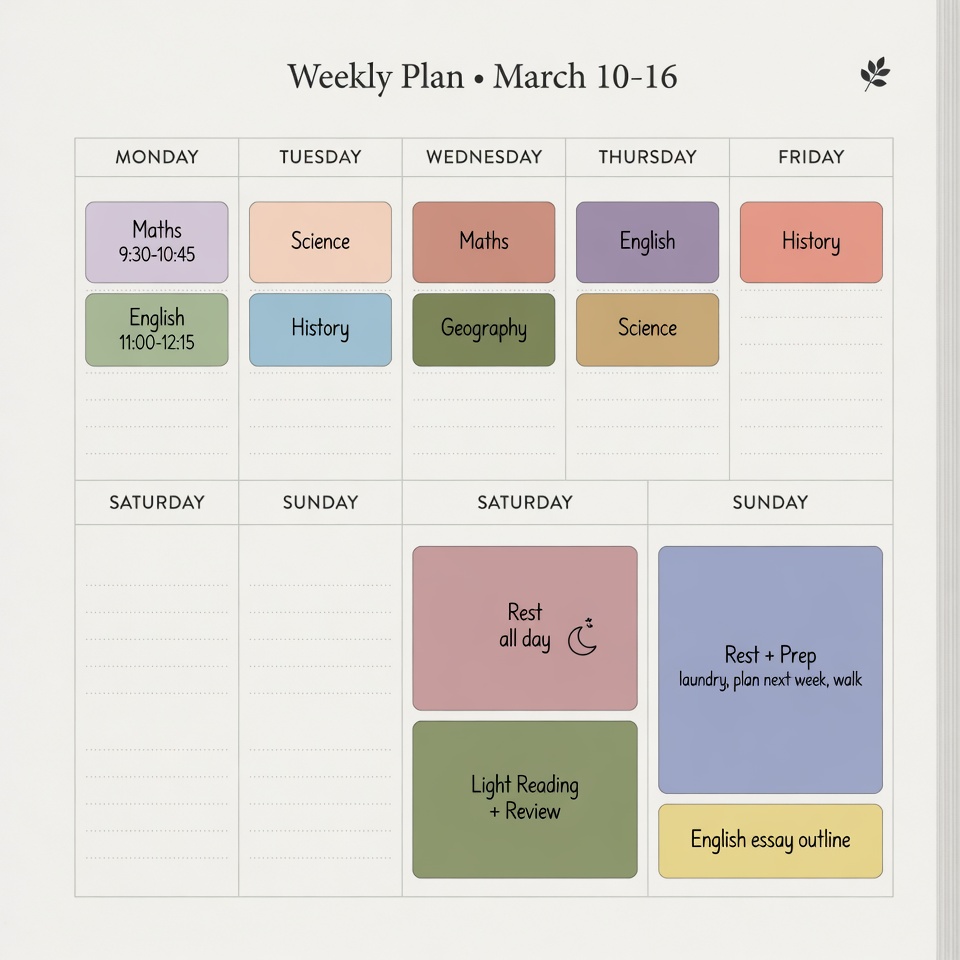
Here’s an example for a GCSE student with school and homework:
Monday – 20 mins Maths (red subject)
Tuesday – 20 mins Science (red subject) + 10 mins English (yellow)
Wednesday – 20 mins Maths (red) + past paper question
Thursday – 20 mins History (red)
Friday – 20 mins Science (red) + 10 mins vocab (yellow)
Saturday – 40 mins combined (one past paper section)
Sunday – Rest, or light review (15 mins max)
For SATs students: 15–20 mins per day, 4–5 days a week, is plenty. Focus on one topic at a time (e.g., fractions, comprehension, grammar rules).
The rule: If you miss a day, don’t double up the next day. Just start fresh. Consistency beats intensity.
Step 4: Build In Rest and Reward
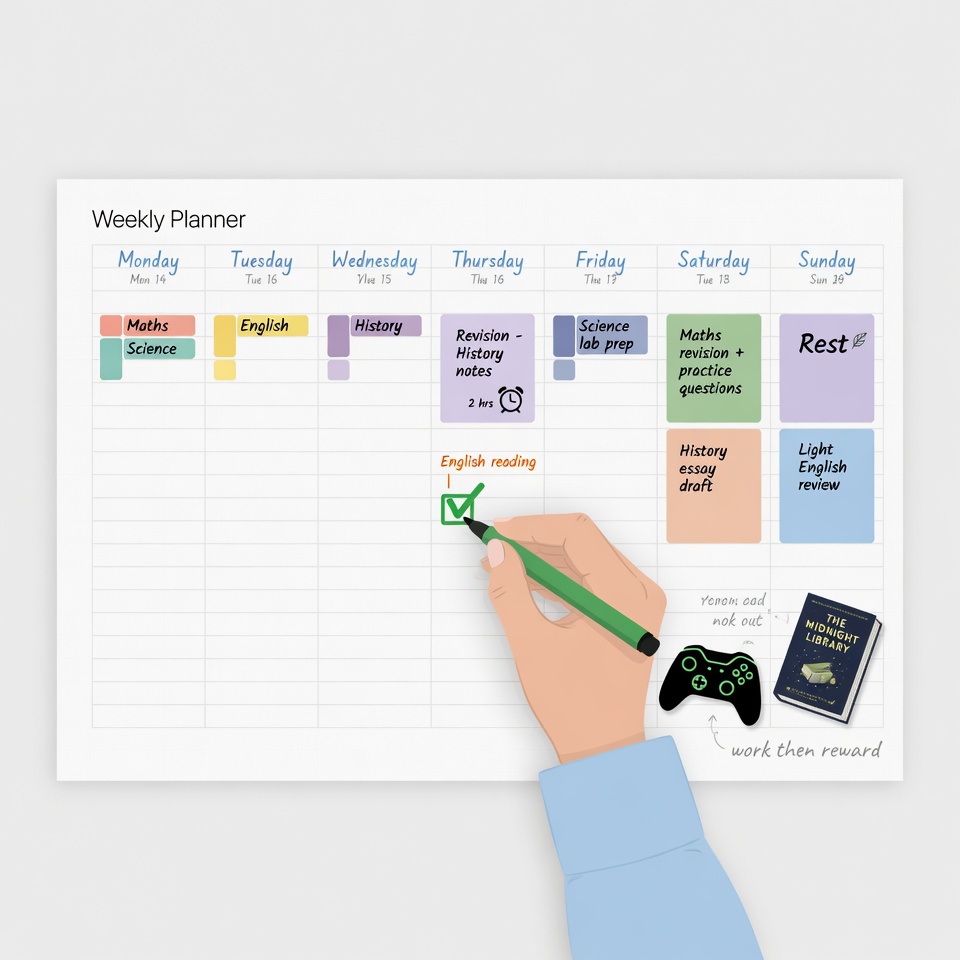
Revision without rest leads to burnout. Burnout kills memory and motivation.
- After every 20‑minute block, take 5 minutes away from the desk.
- After a full day of planned revision, do something you enjoy. (Watch a show, call a friend, play a game.)
- One full rest day a week – no revision, no guilt.
Why this works: Your brain consolidates memories during rest. When you come back, you’ll actually remember more.
How Royale Tutors Helps Build the Right Plan
Every student is different. Some need more time on maths, others on English. Some work better in the morning, others in the evening.
At Royale Tutors, we don’t give generic plans. We help each student build a personalised revision timetable that fits their life, their subjects, and their energy levels.
Included in our support:
- A free assessment to identify your child’s weakest subjects
- A structured, realistic weekly plan
- Accountability and progress tracking
- Exam technique embedded into every session
Conclusion: Start Small, Stay Consistent
You don’t need to be at your desk for hours every day. You don’t need to give up weekends.
You just need a simple plan, honest priorities, and the discipline to show up for 20 minutes at a time.
Start tonight: Write down your red subjects (the ones that need real help). Tomorrow, do 20 minutes on one of them.
Small steps, repeated, win every time.
This section provides an overview of the blog, showcasing a variety of articles, insights, and resources to inform and inspire readers.
-
Panic‑Revising at 2am Won’t Save Your Grade. Here’s What Actually Works When Time Is Running Out.
Introduction: The Last‑Minute Panic It’s the night before the exam. Or maybe two nights before. You have a textbook open, a highlighter in your hand, and a rising sense of dread. You’ve…
-
Title: You Knew the Topic. You Revised for Hours. So Why Did You Lose Marks? These 5 Mistakes Are the Reason.
Introduction: The Frustration of Lost Marks You walk out of the exam hall feeling good. You answered every question. You recognised the topics. You feel… relieved. Then the results arrive. The grade…
-
Every Year, Thousands of Year 6 Children Lose Marks on These 5 SATs Maths Questions. Here’s How to Make Sure Yours Doesn’t.
Introduction: The Marks That Slip Away You’ve done the revision. You’ve practised the times tables, the fractions, the word problems. Your child walks into the SATs maths papers feeling ready. Then the…

Leave a Reply